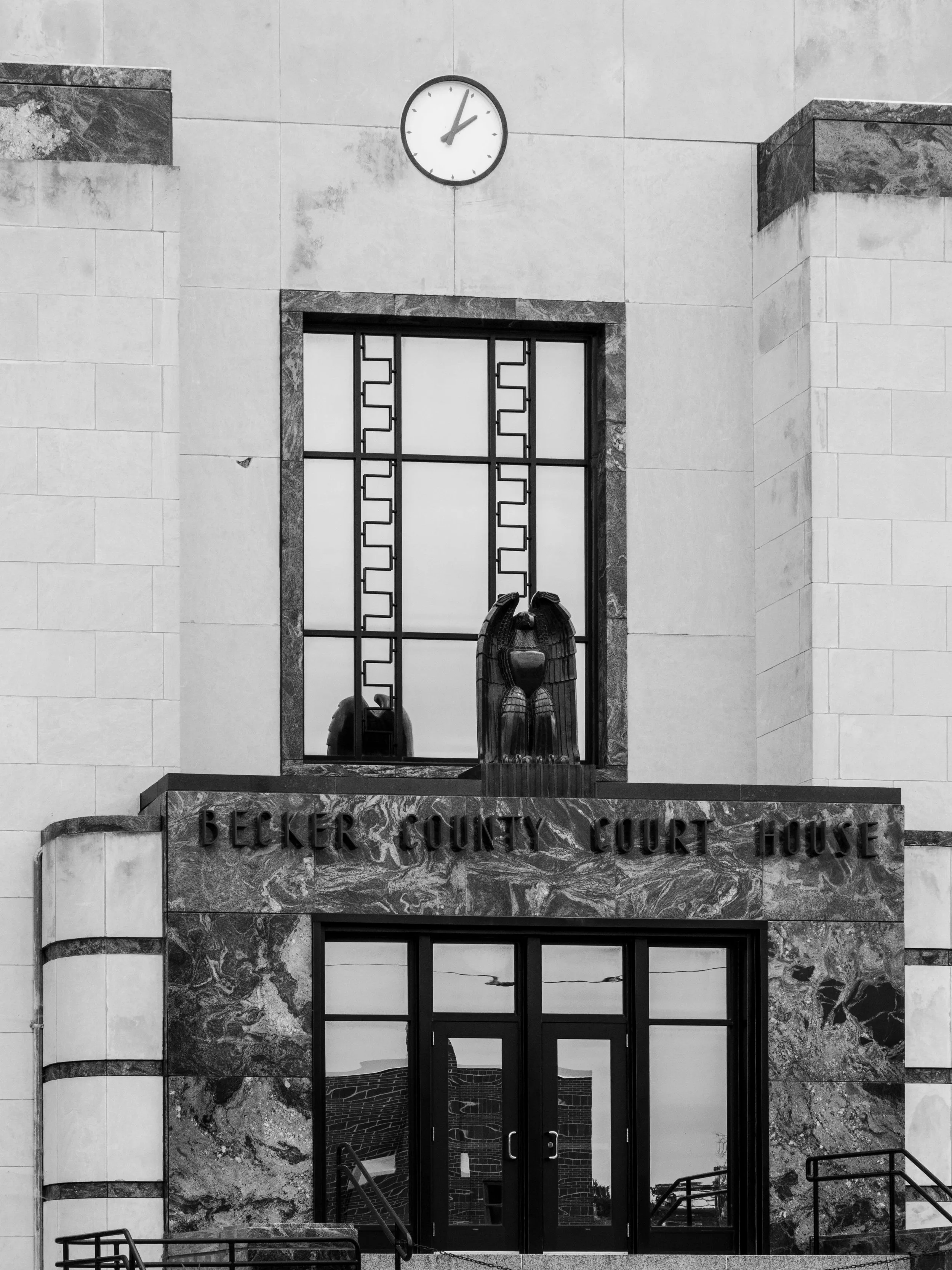
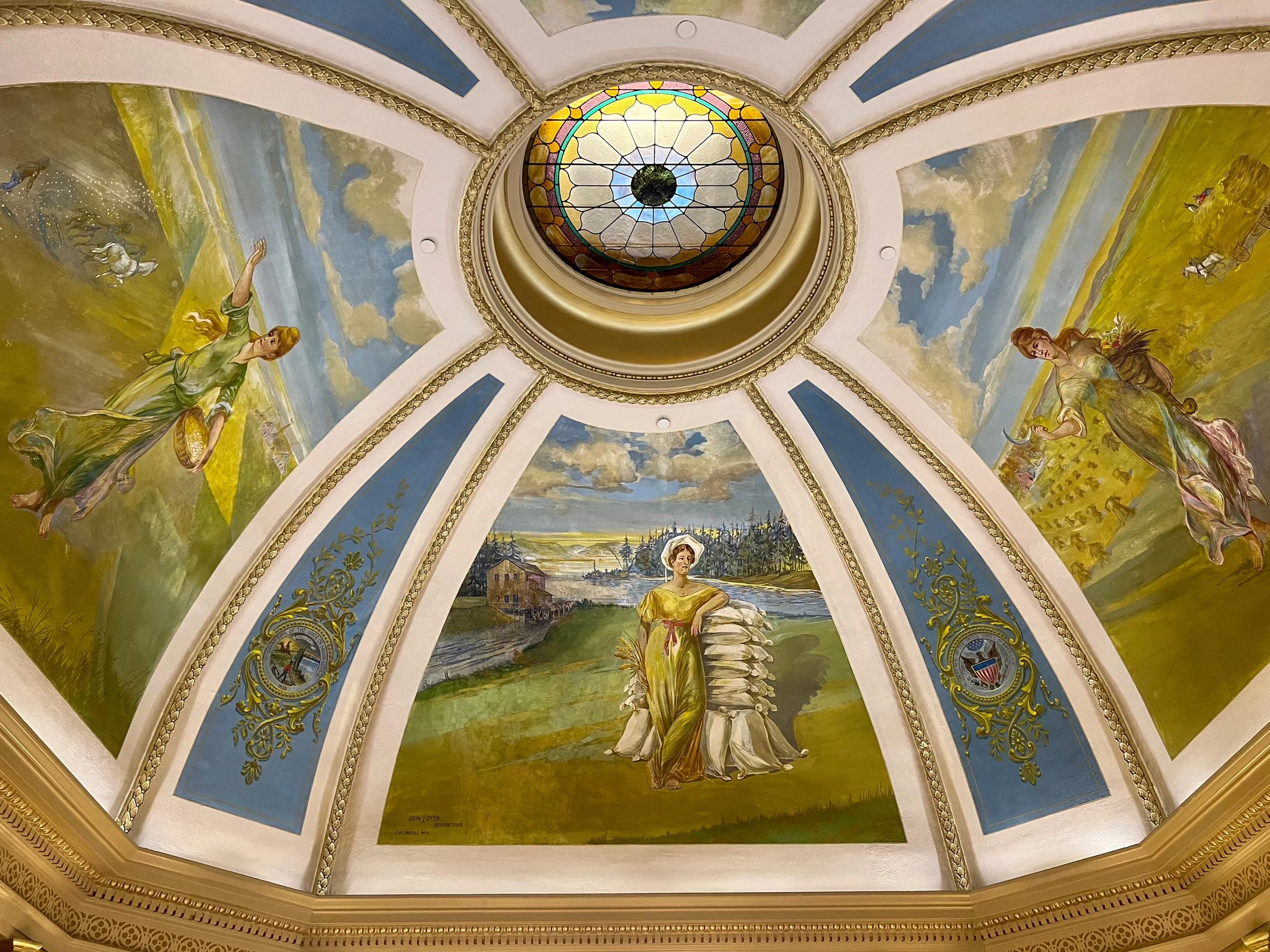
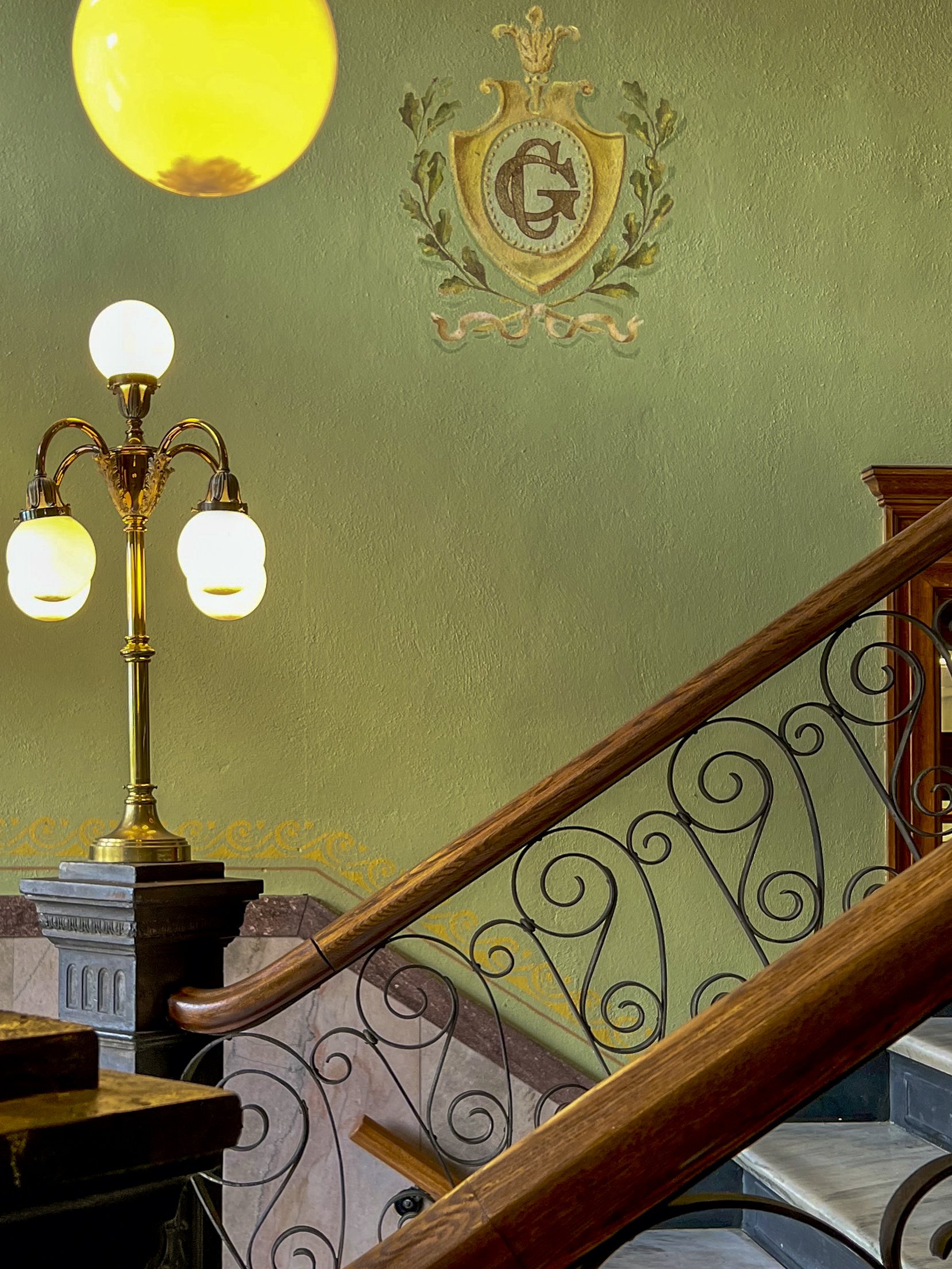
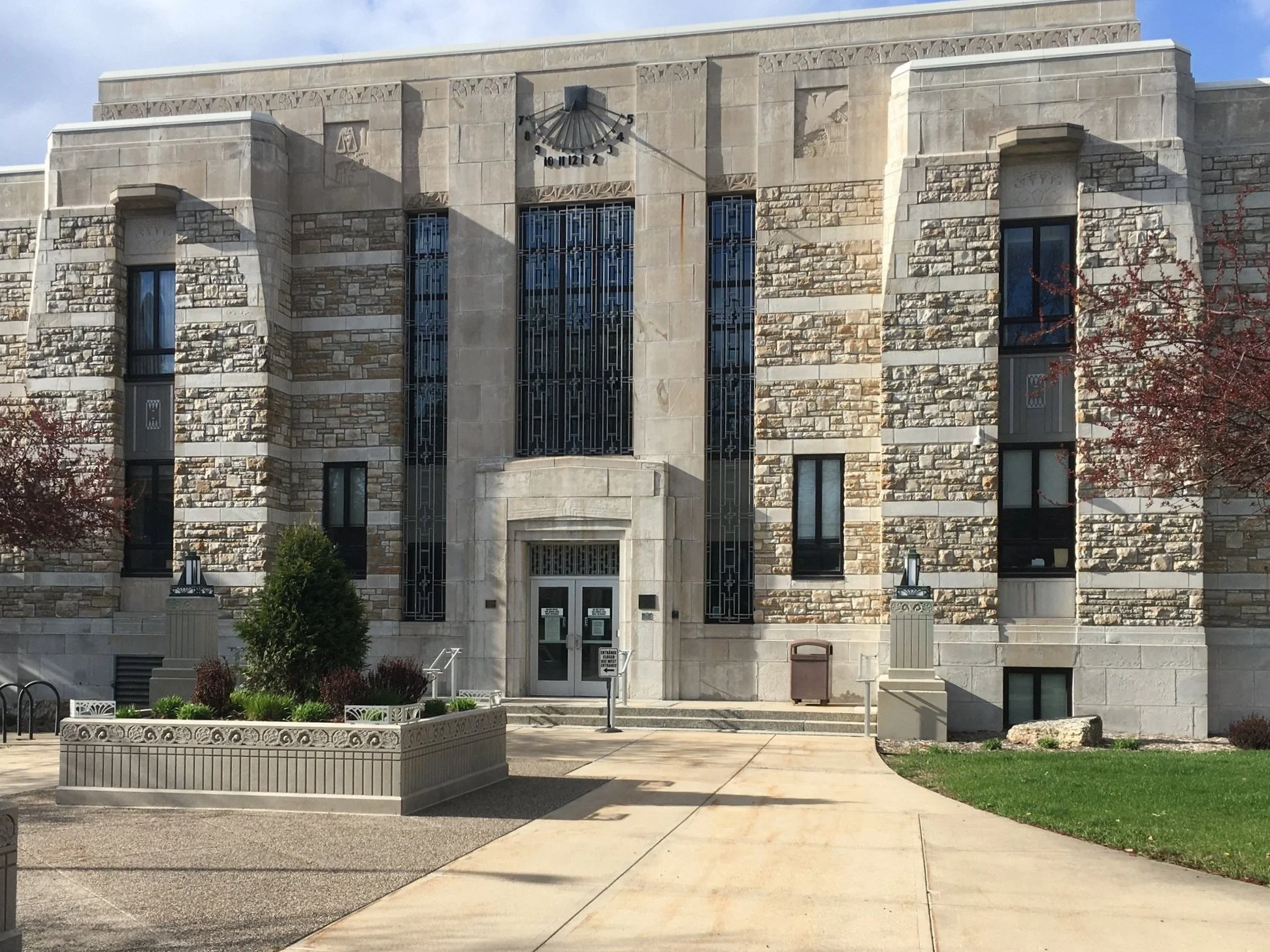
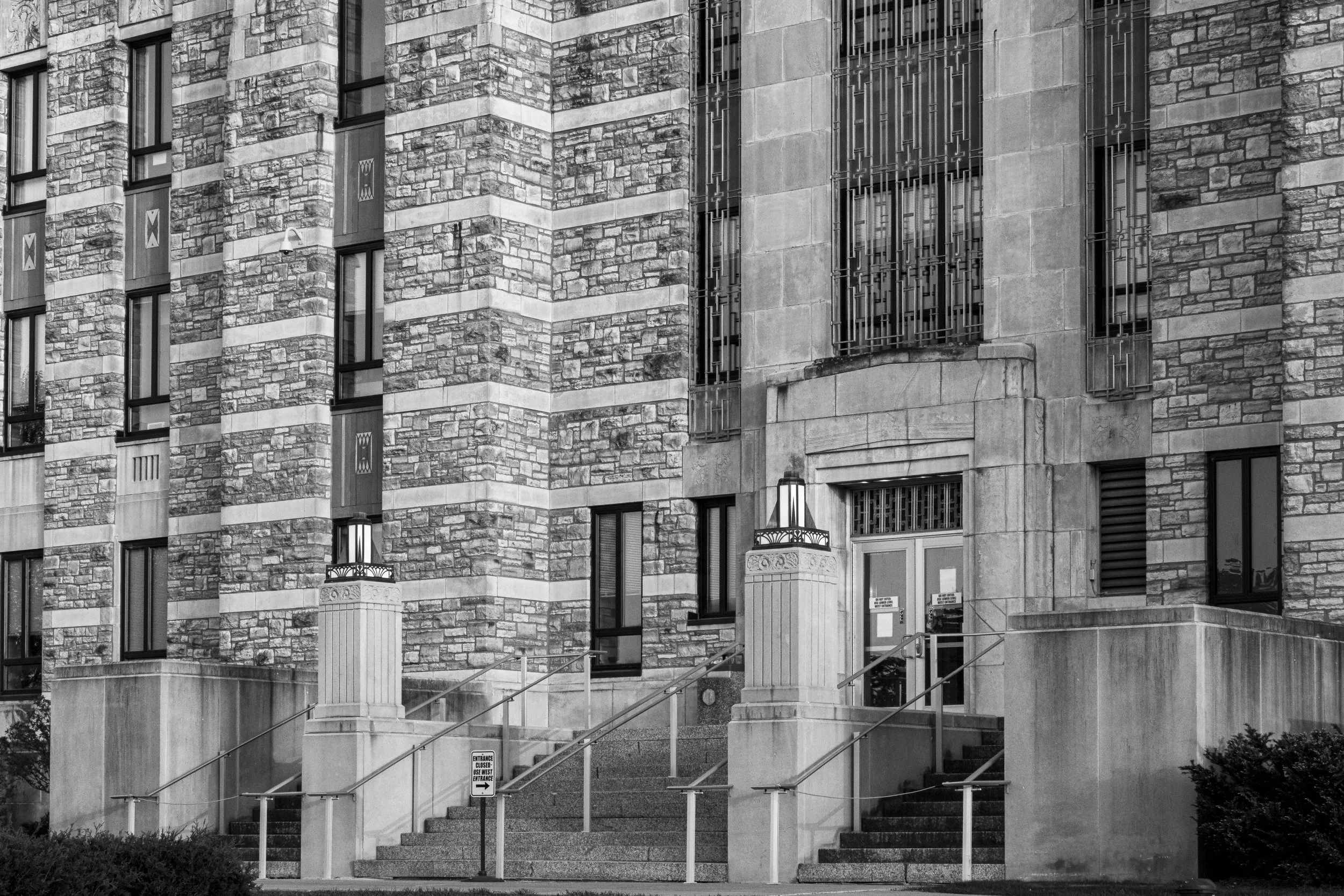
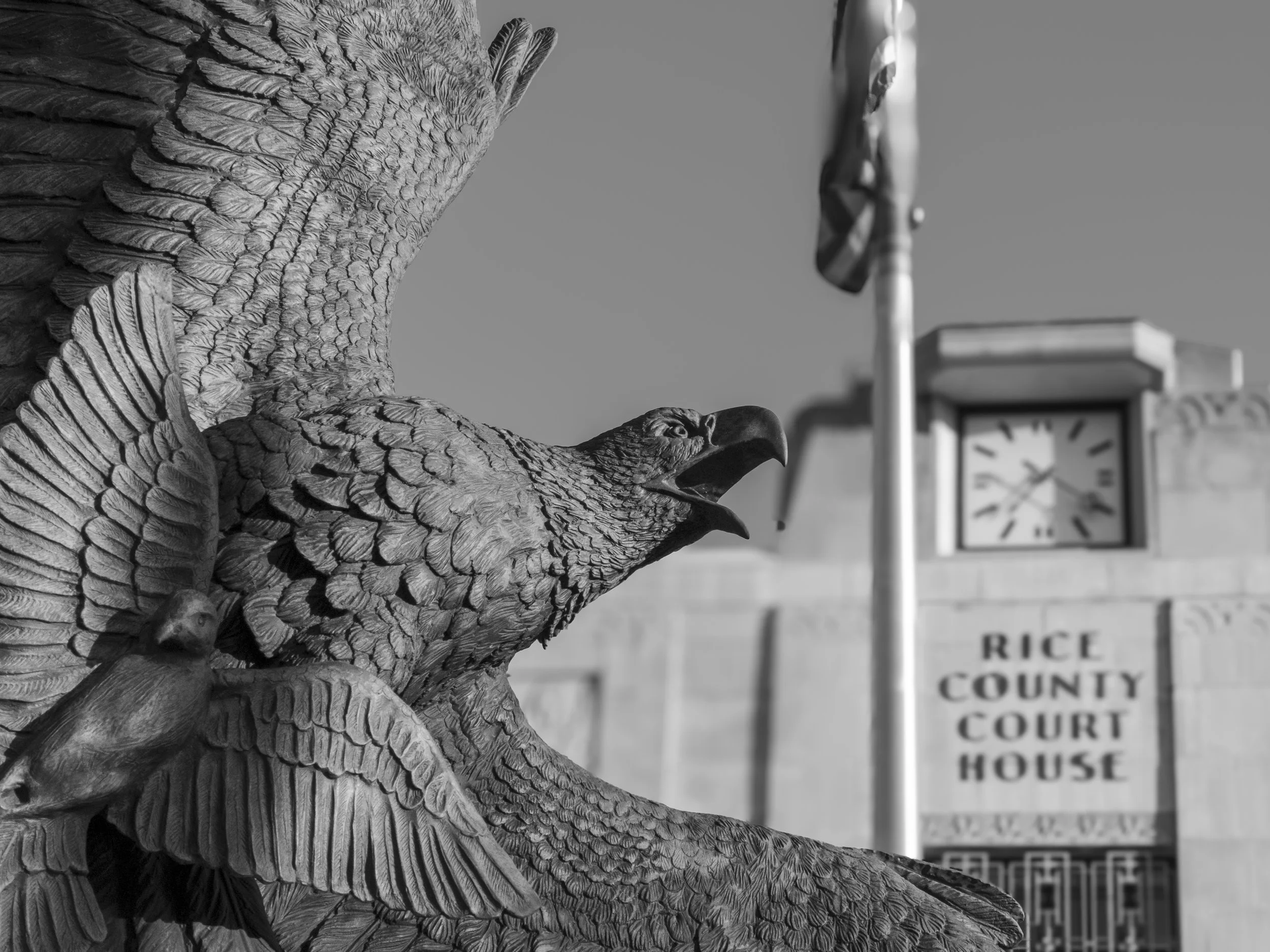
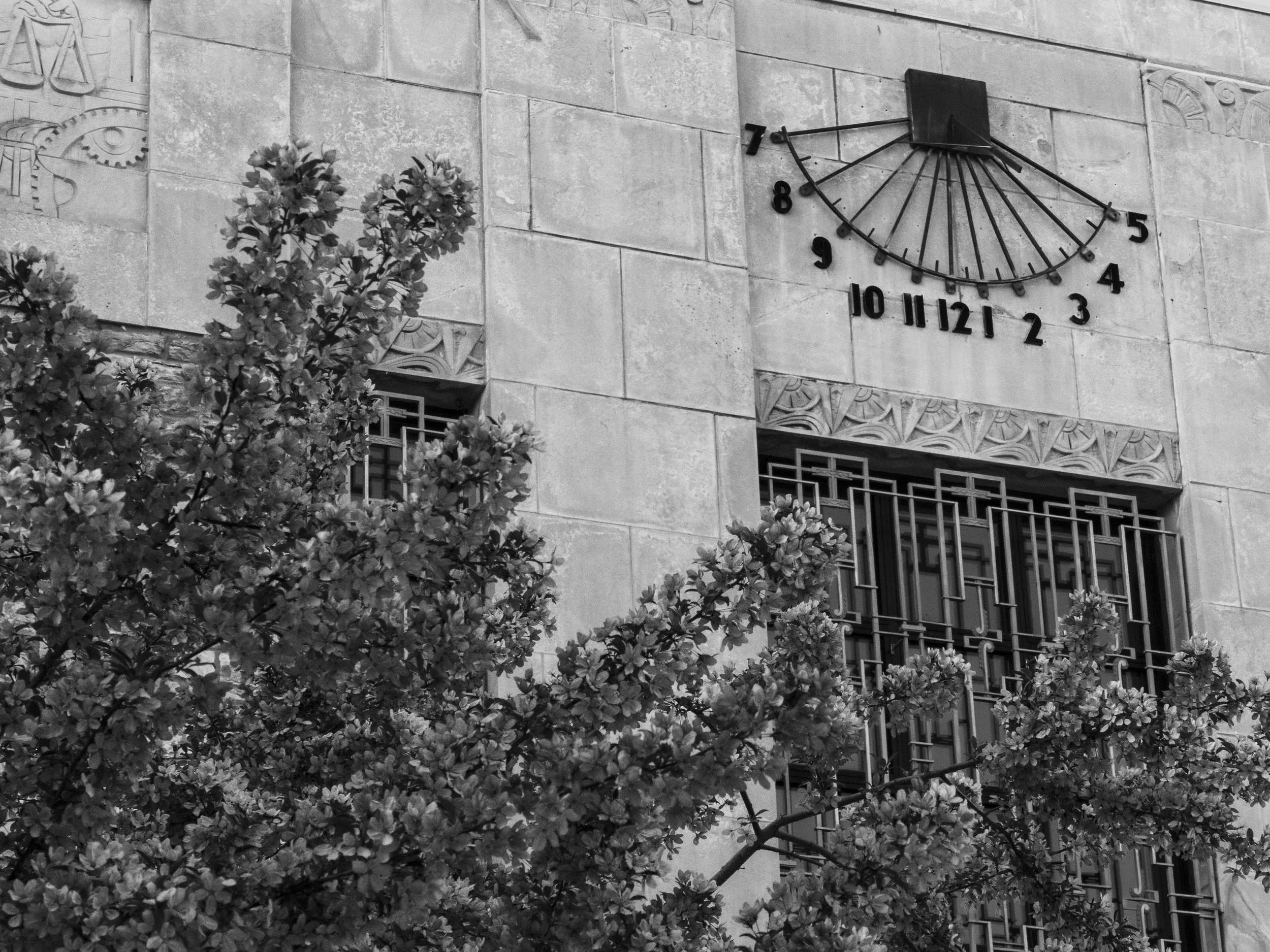
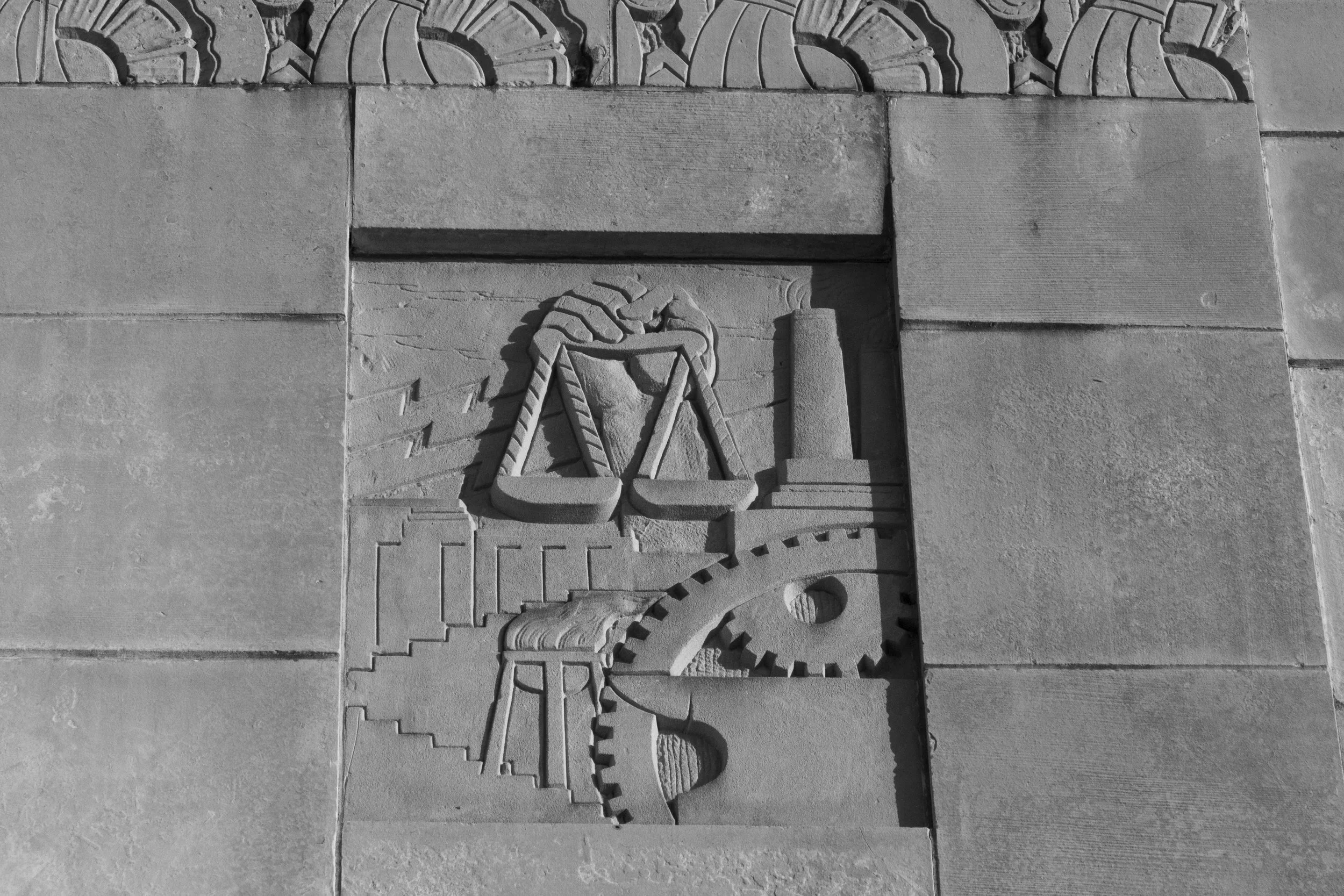
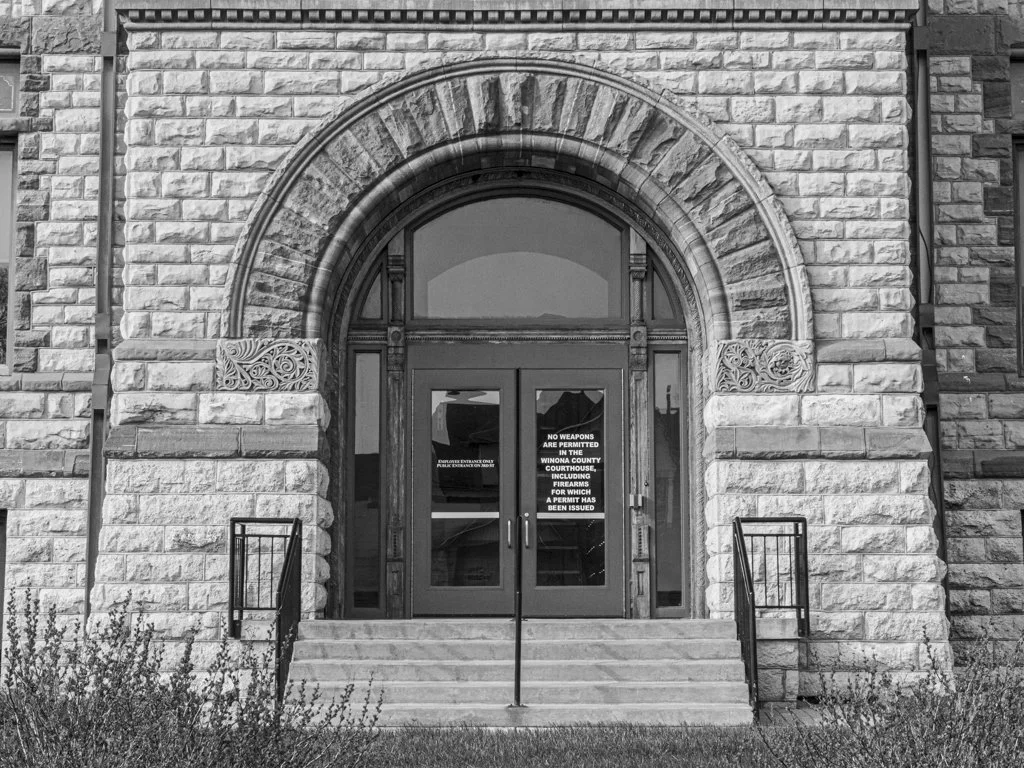
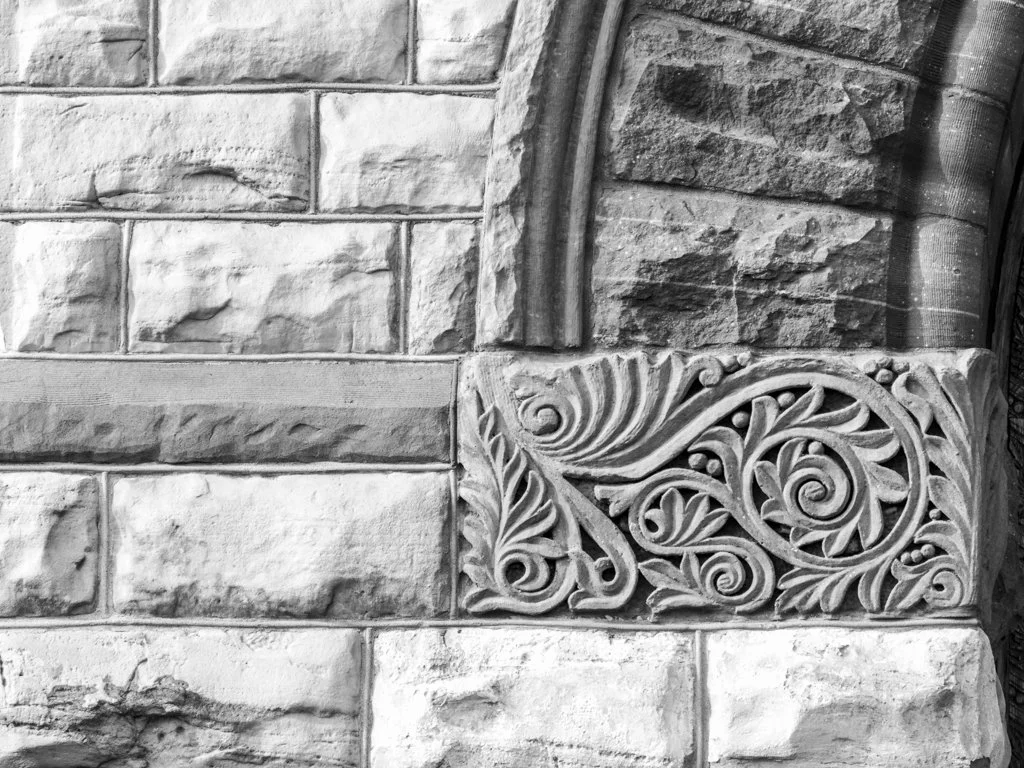
I didn’t know a lot about different architectural styles when I started my county courthouse project. Art Deco was a style from between the world wars that had caught my attention partly because it was the background to so many of the old movies that my mother loved to watch (see my earlier posts about Rice or Becker County or courthouse staircases). But as I traveled around the state I noticed that a lot of the county buildings outside the Twin Cities were much older. They were often impressive monoliths constructed of massive blocks of stone sometimes adorned with intricate carvings and soaring clock towers. Noticable hallmarks included arched doorways and windows that reminded me of churches I’d visited in Europe or round towers with conical roofs and dentil details reminiscent of fairy tale castles.
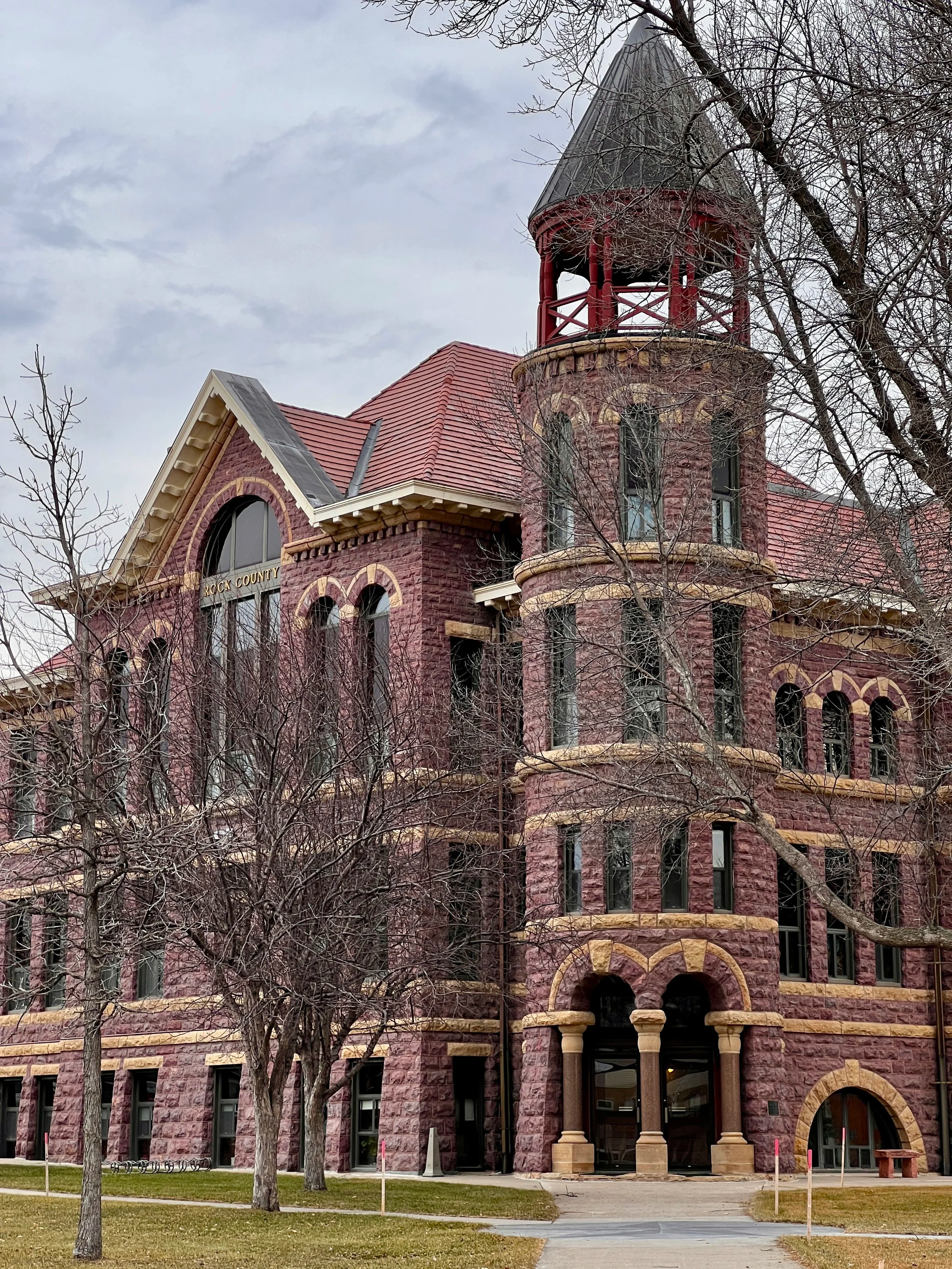
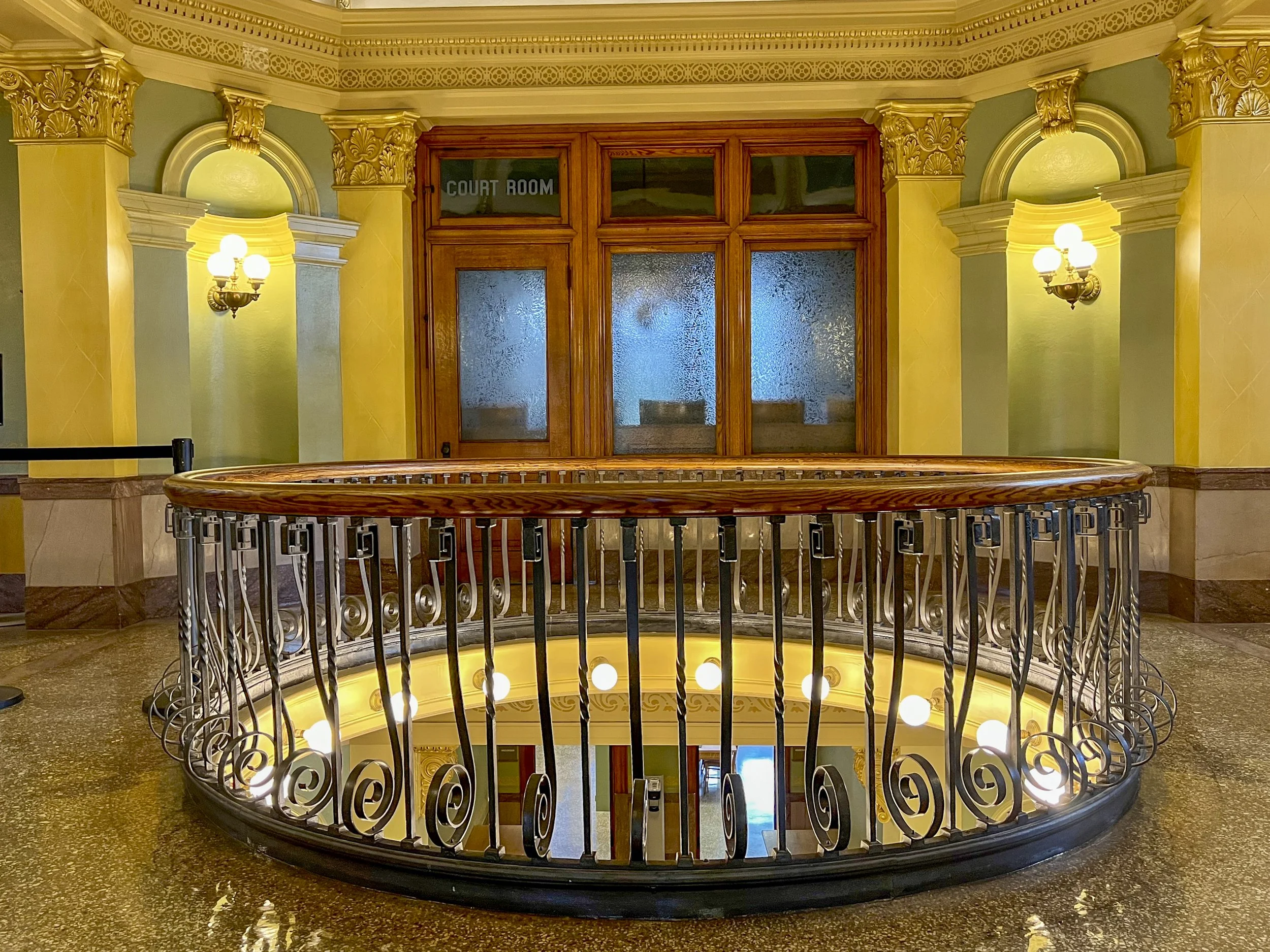
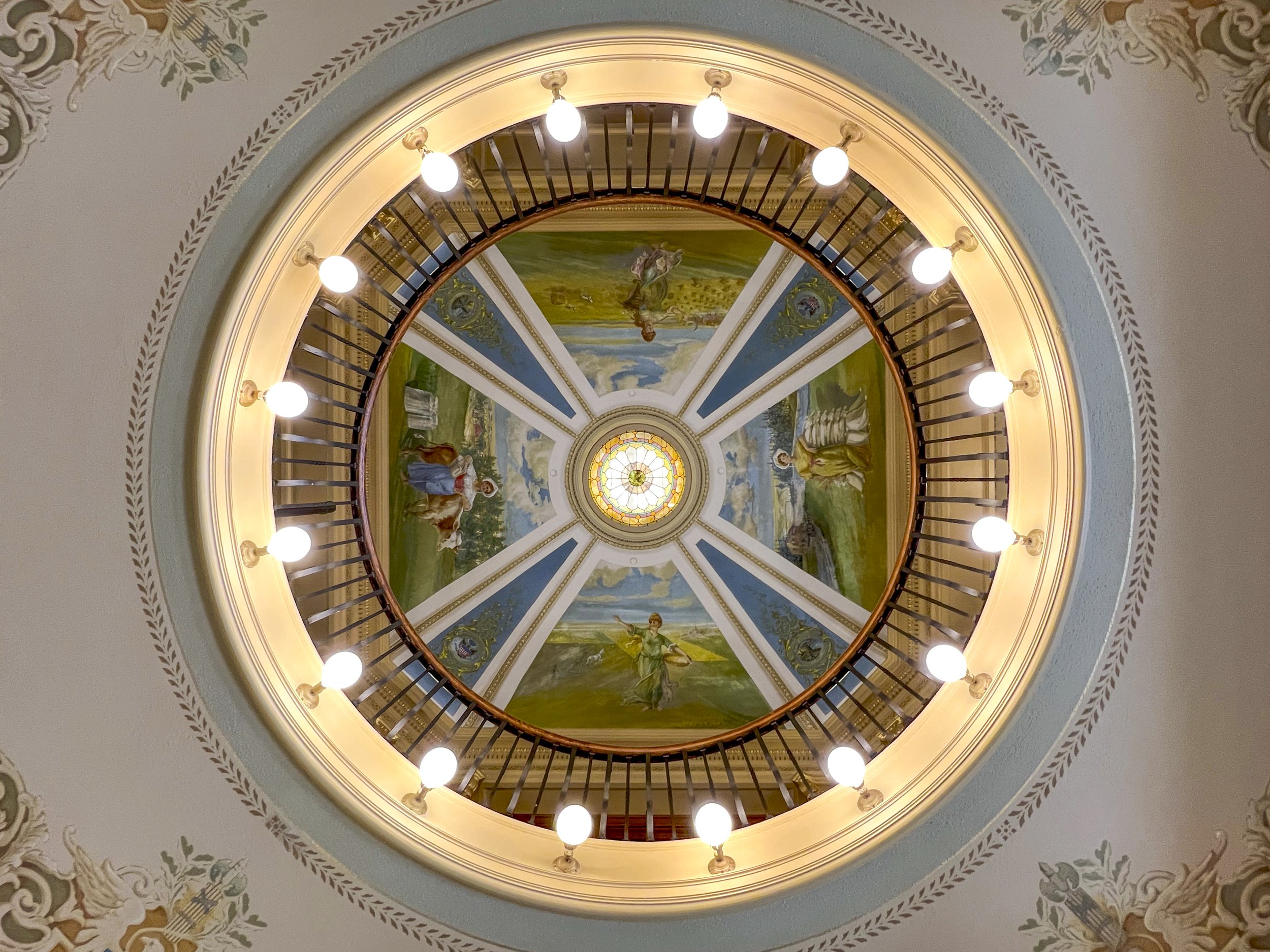
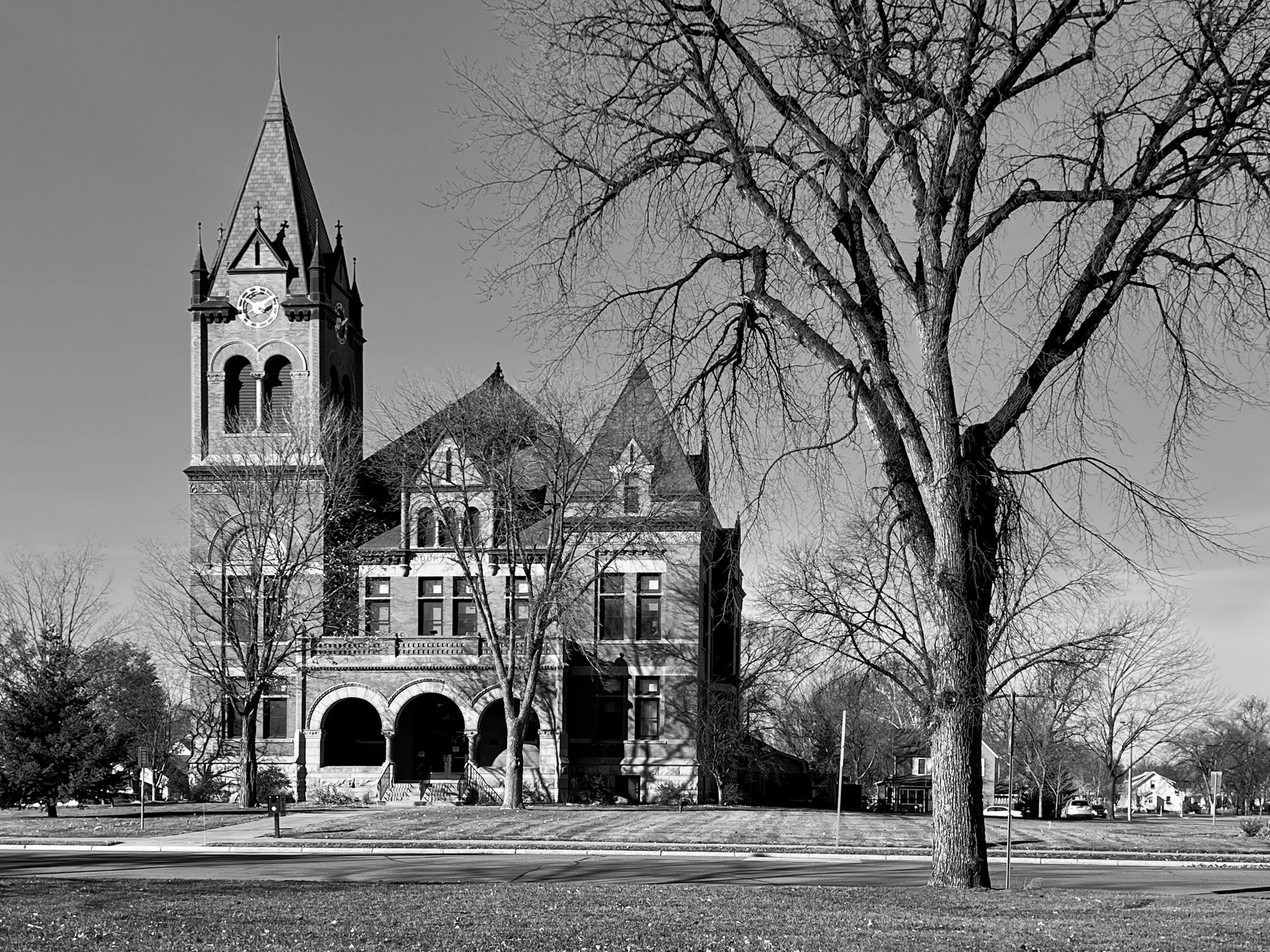
Rock County Courthouse
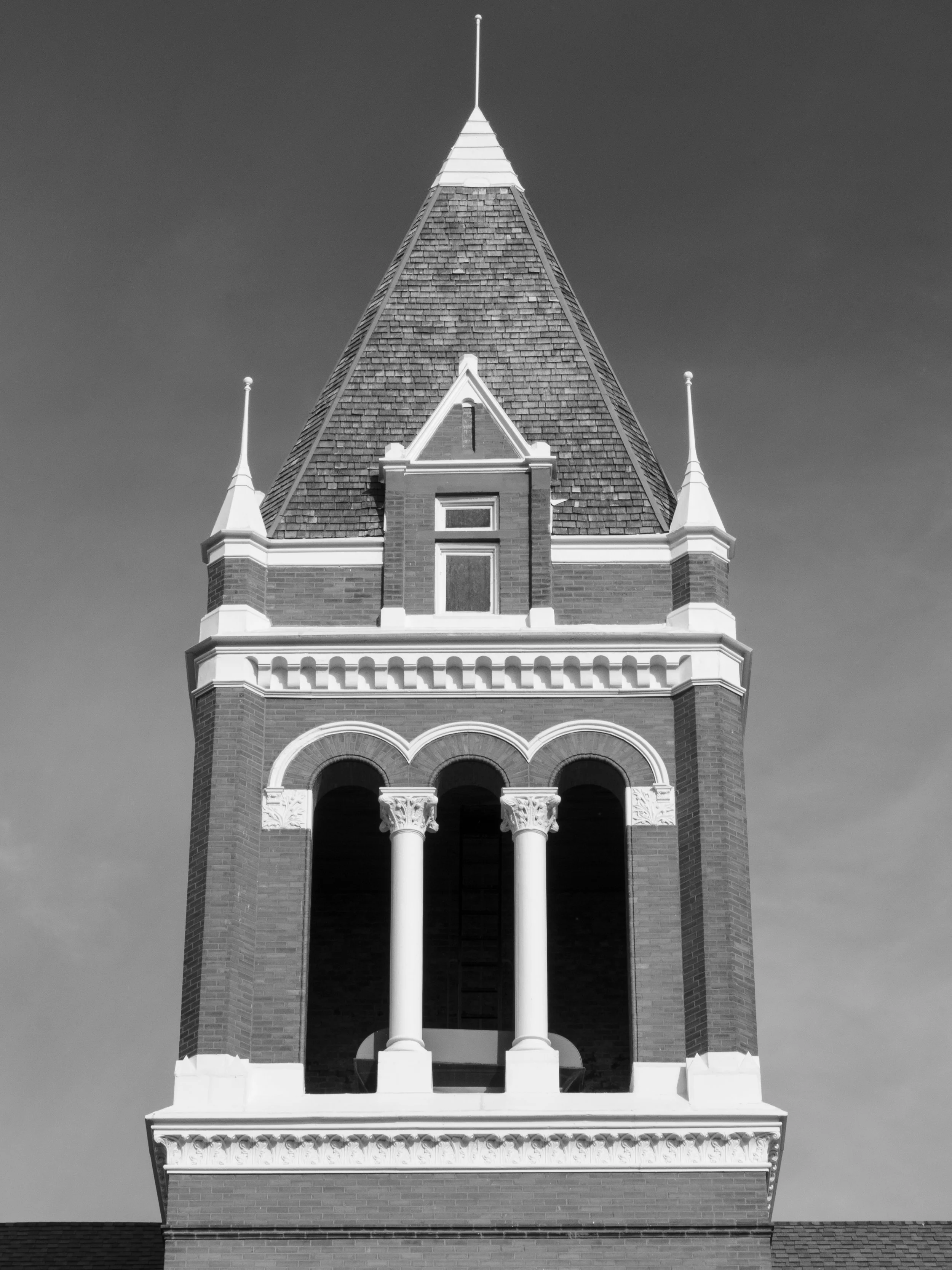
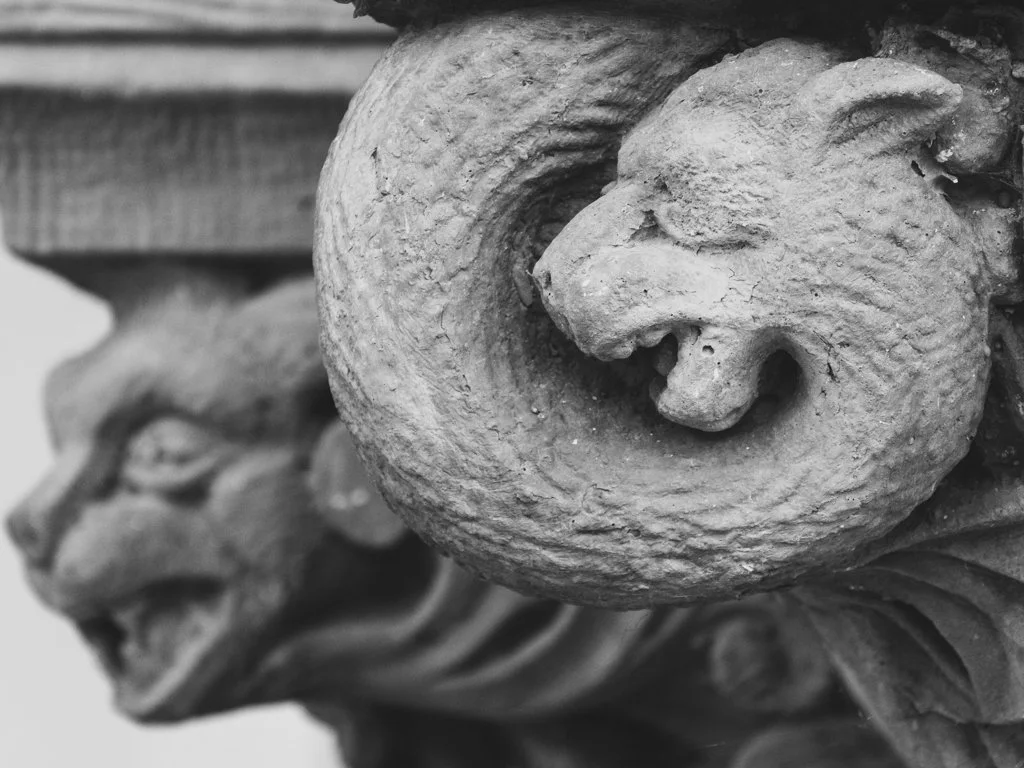
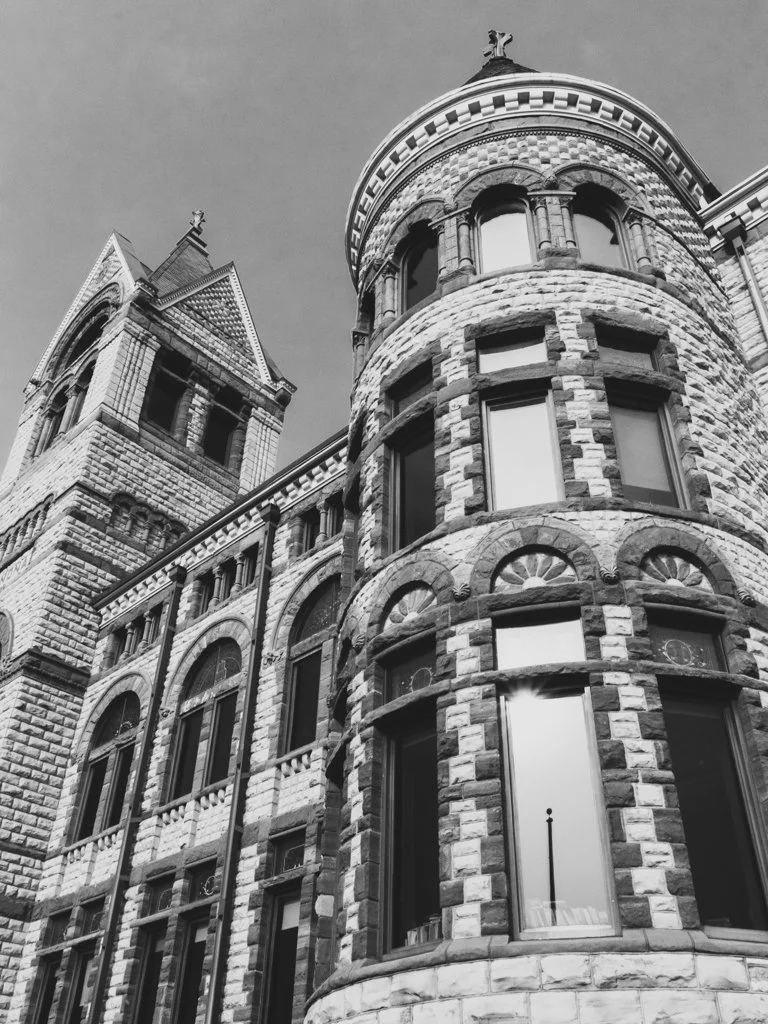
Built in 1888 in Luverne, this courthouse has some of the classic features of Richardsonian Romanesque
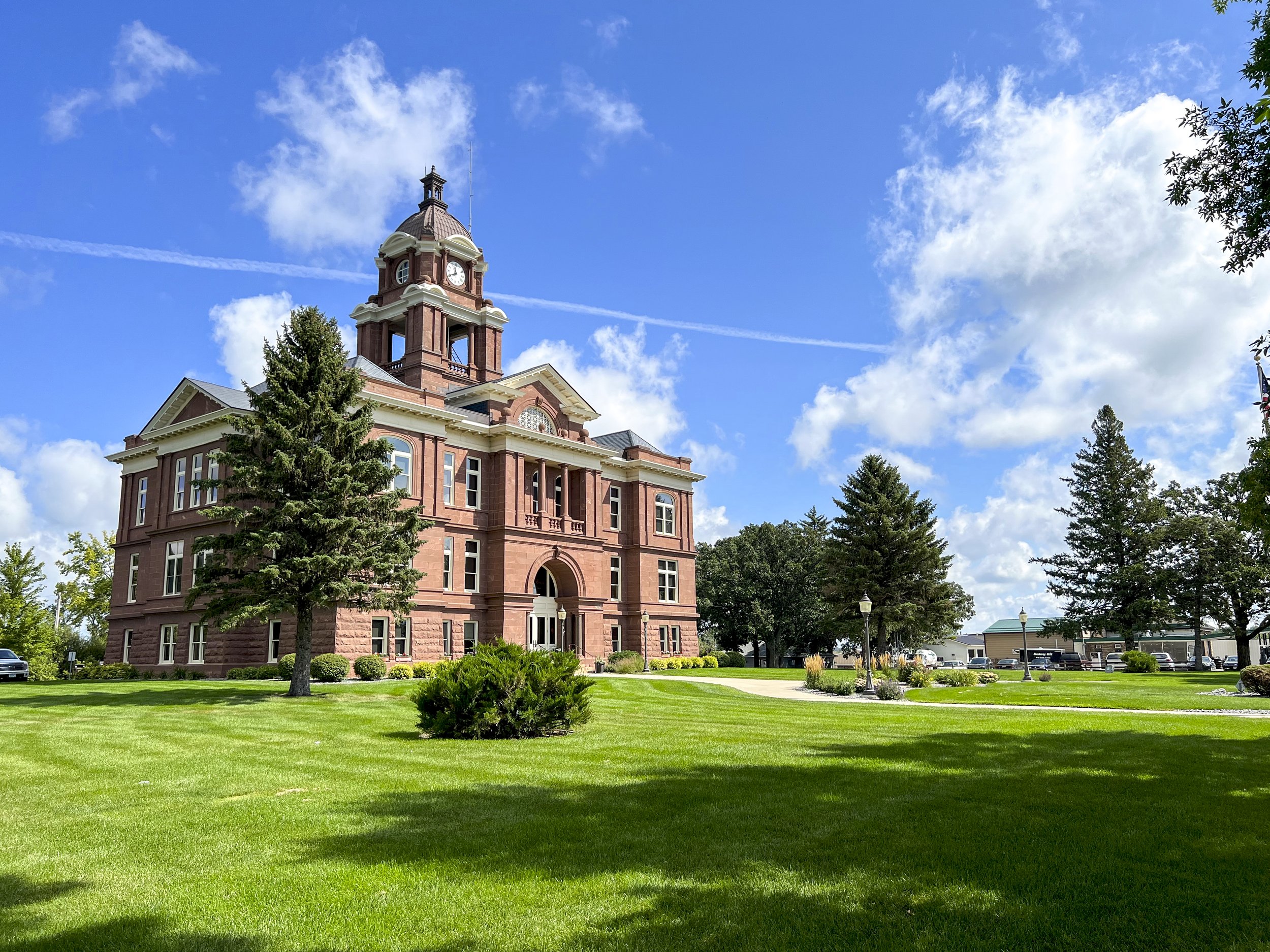
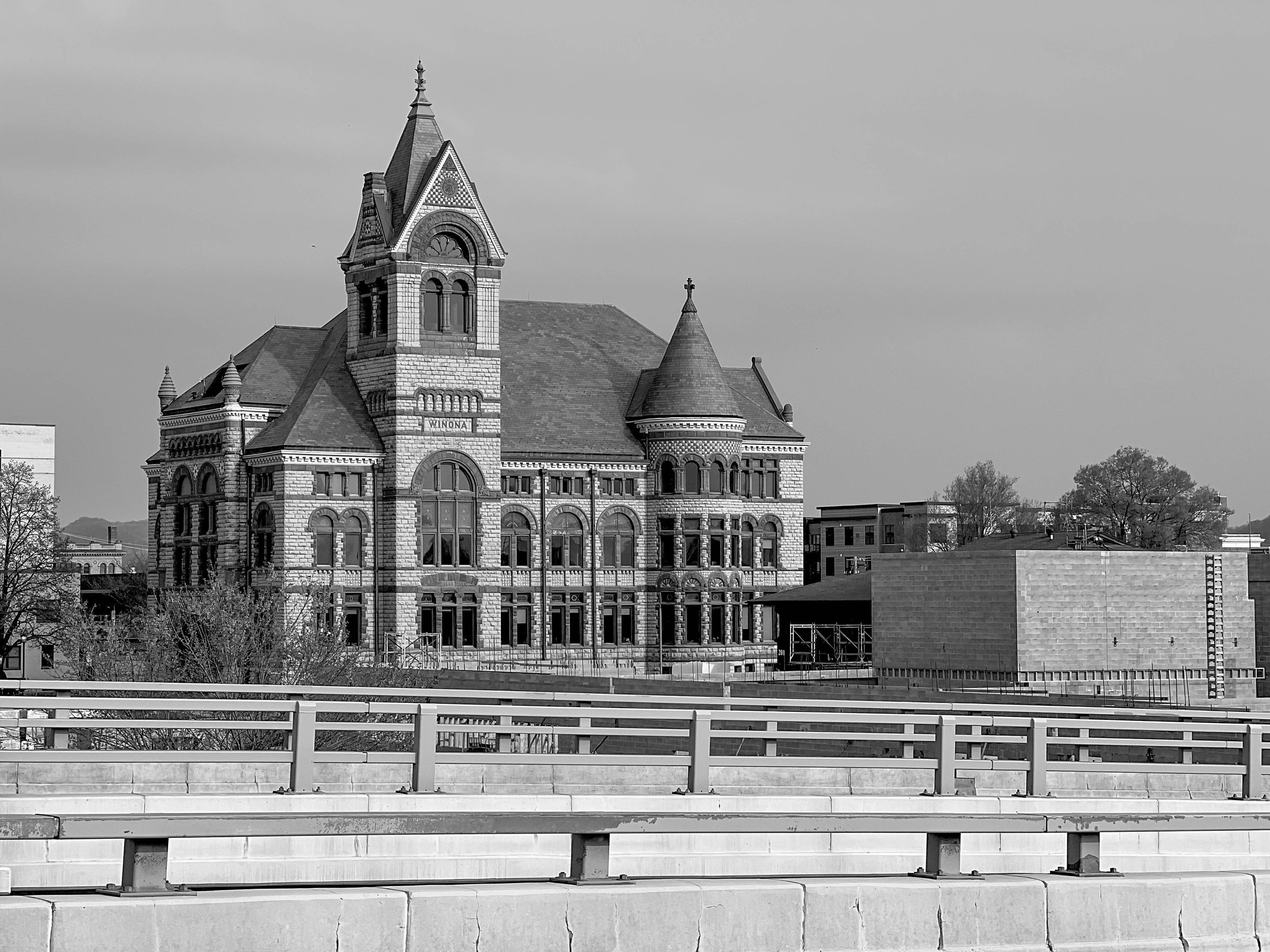
So I was not surprised to discover that an architect working in the 1870s and 80s - Henry Hobson Richardson - had mined the architectural features of Old World and ancient buildings to create a uniquely American style that became known as Richardsonian Romanesque. Though Richardson had worked mostly in New England his reputation spread steadily westward and eventually became fashionable throughout the country. It seems his work was especially popular for civic buildings like county courthouses and Minnesota still has some remarkable examples of the style.
You don’t have to like the heavy, even foreboding, Richardsonian Romanesque style to appreciate its appeal to small town Minnesotans who wanted to create a sense of grandeur, sophistication, and gravitas as their rural communities grew in importance as agricultural hubs and transportation crossroads. And it is especially hard to ignore the formidable presence of these courthouses when they dominate small town squares and at least one metropolitan city center.
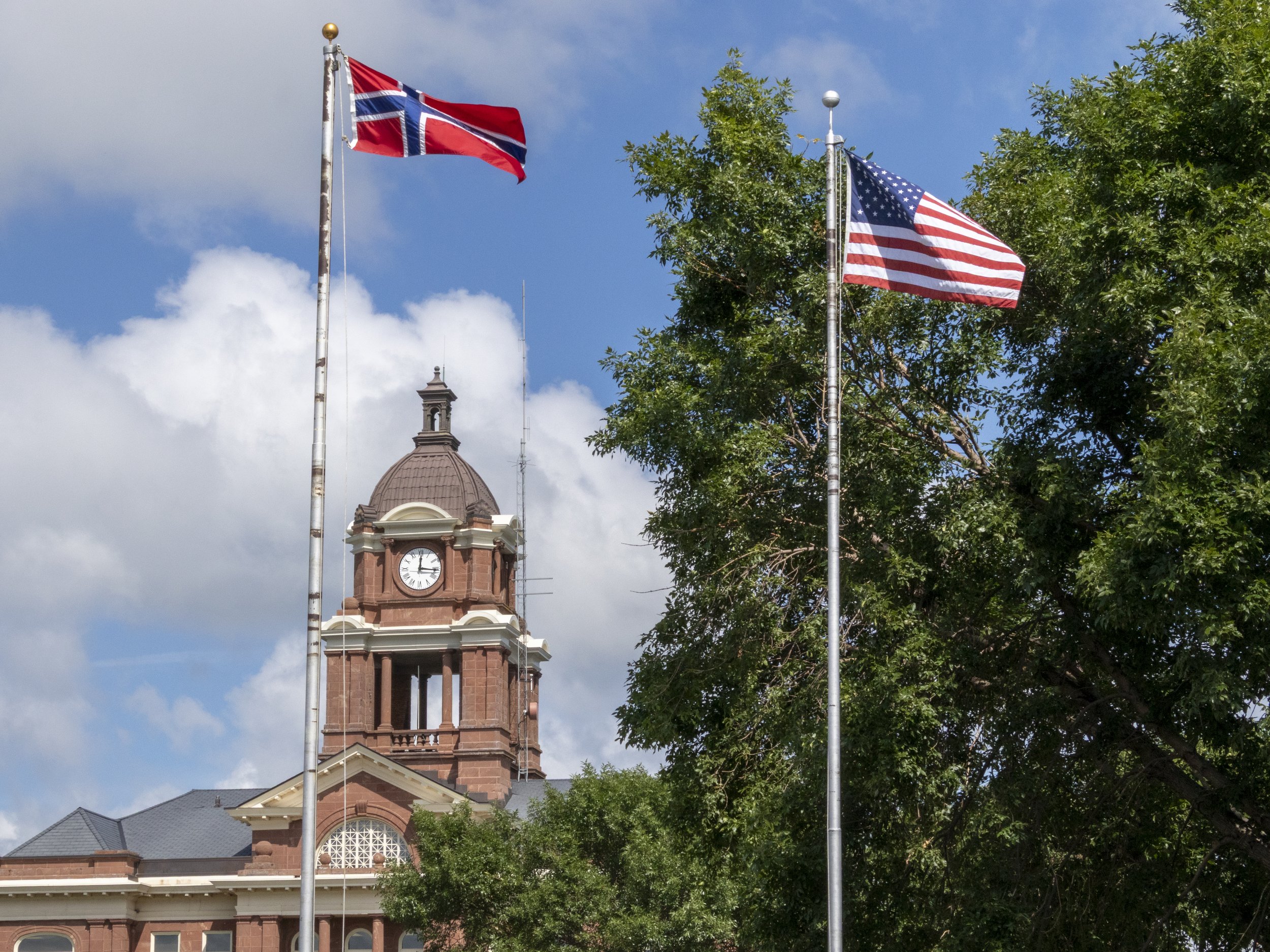
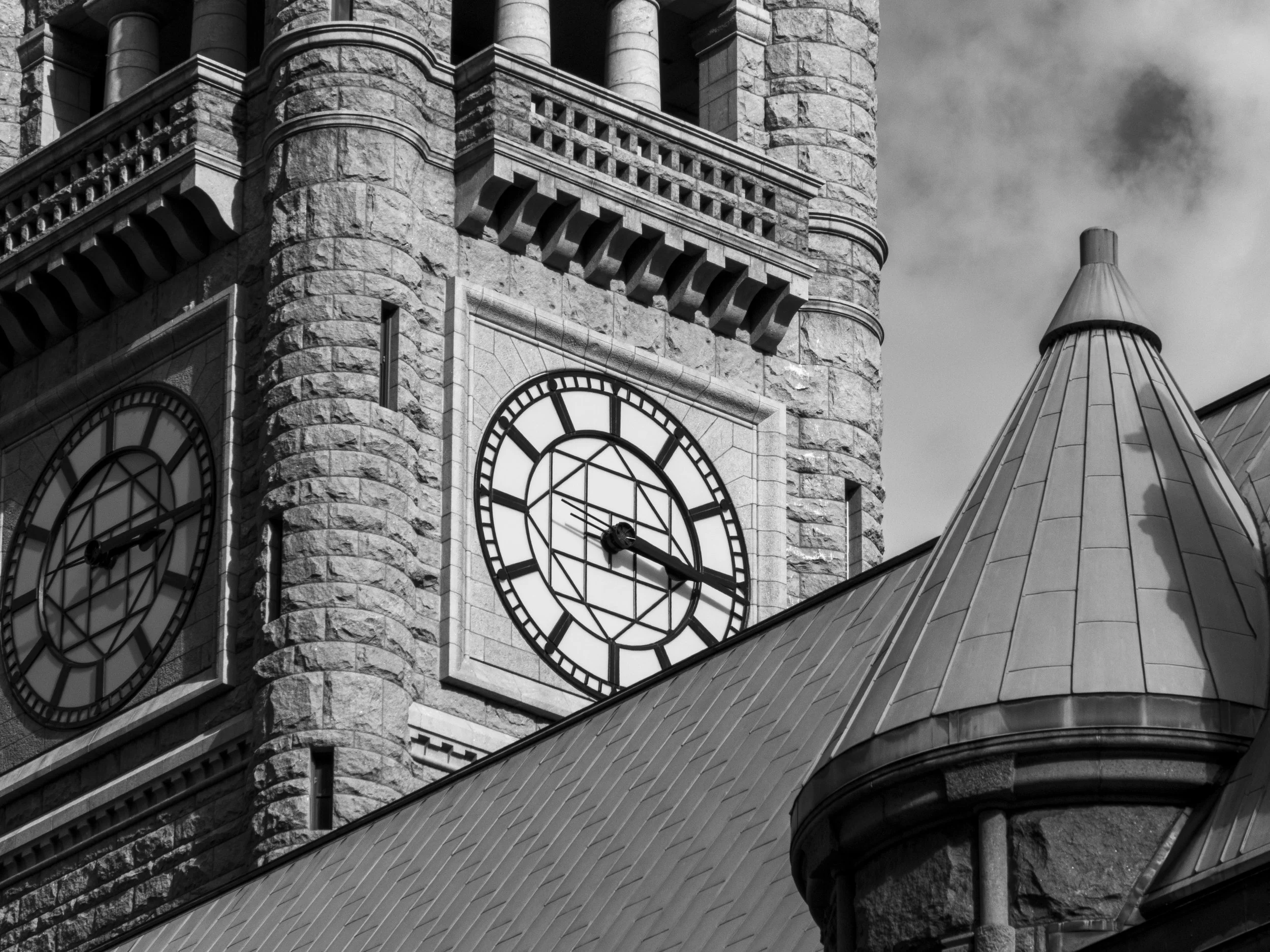
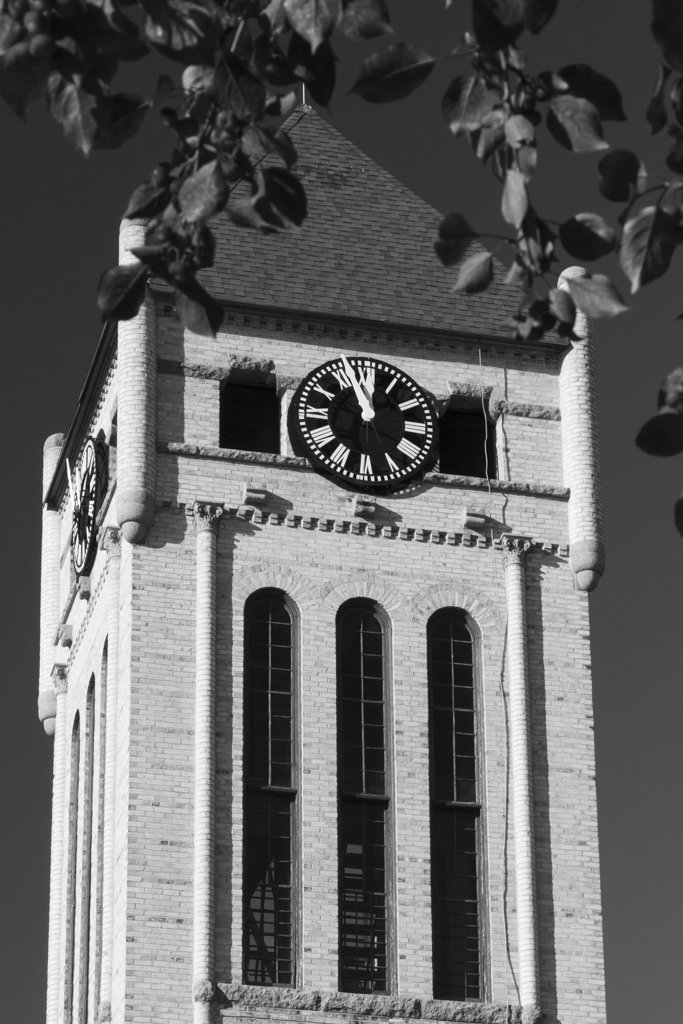
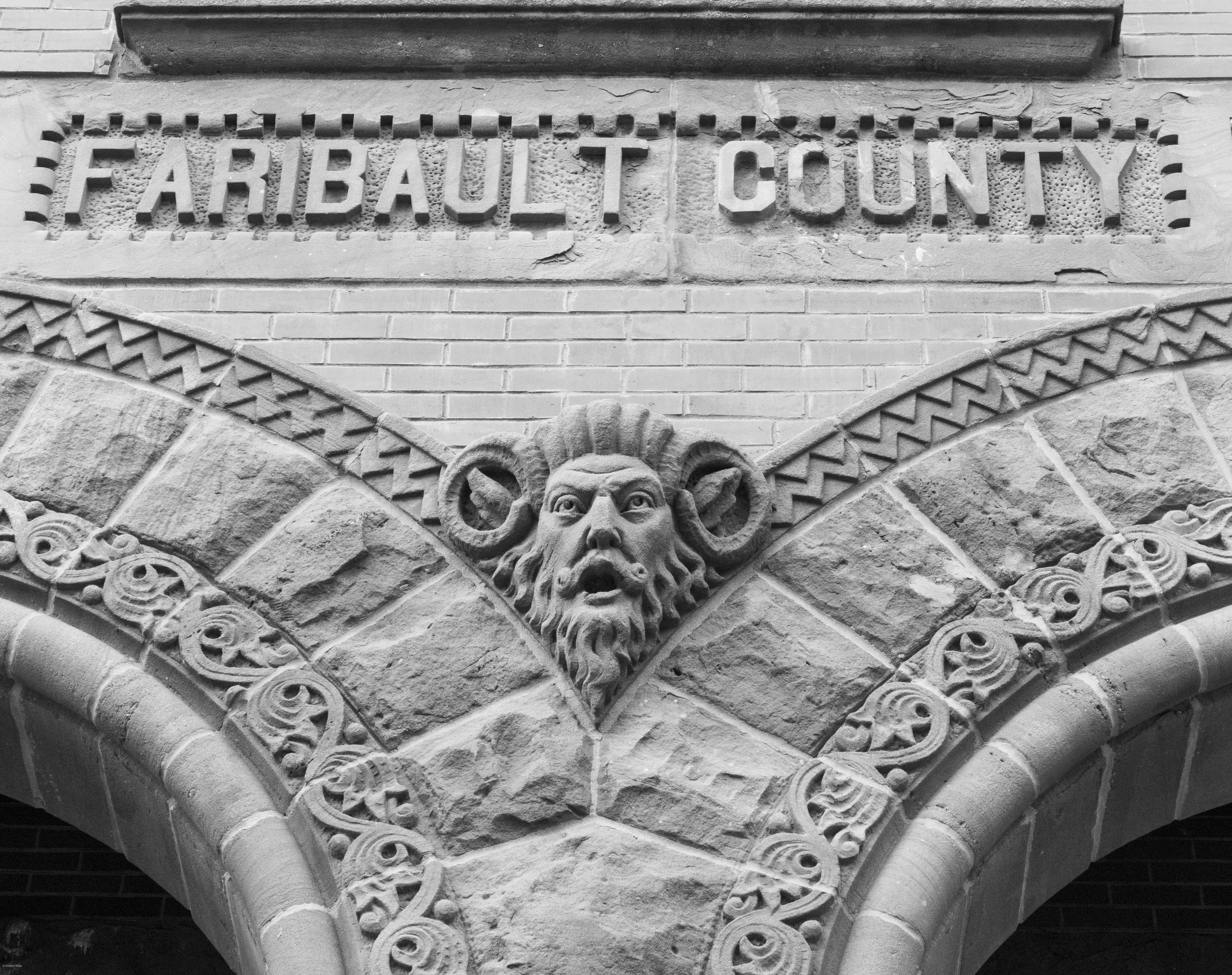
Here, then, are some of the Richardsonian Romanesque courthouses in Minnesota, all built between 1870 and 1900 and still used for some kind of government business. Who knows how many more we might have had originally? During the 20th century, many counties were compelled to replace older buildings that had become too ramshackle to renovate or had even burned down. Are you a Richardsonian Romanesque fan or do you prefer something less ornate and ostentatious?

![Drawing for eagle statue [Credit: Foss Architecture]](https://images.squarespace-cdn.com/content/v1/522fca54e4b003b483a557d7/1773599844760-JGWABB7MLUPVJBW6EGPW/Becker%2BCounty%2BCourthouse%2BDrawings%2B-%2BFoss%2BArchitecture.jpg)