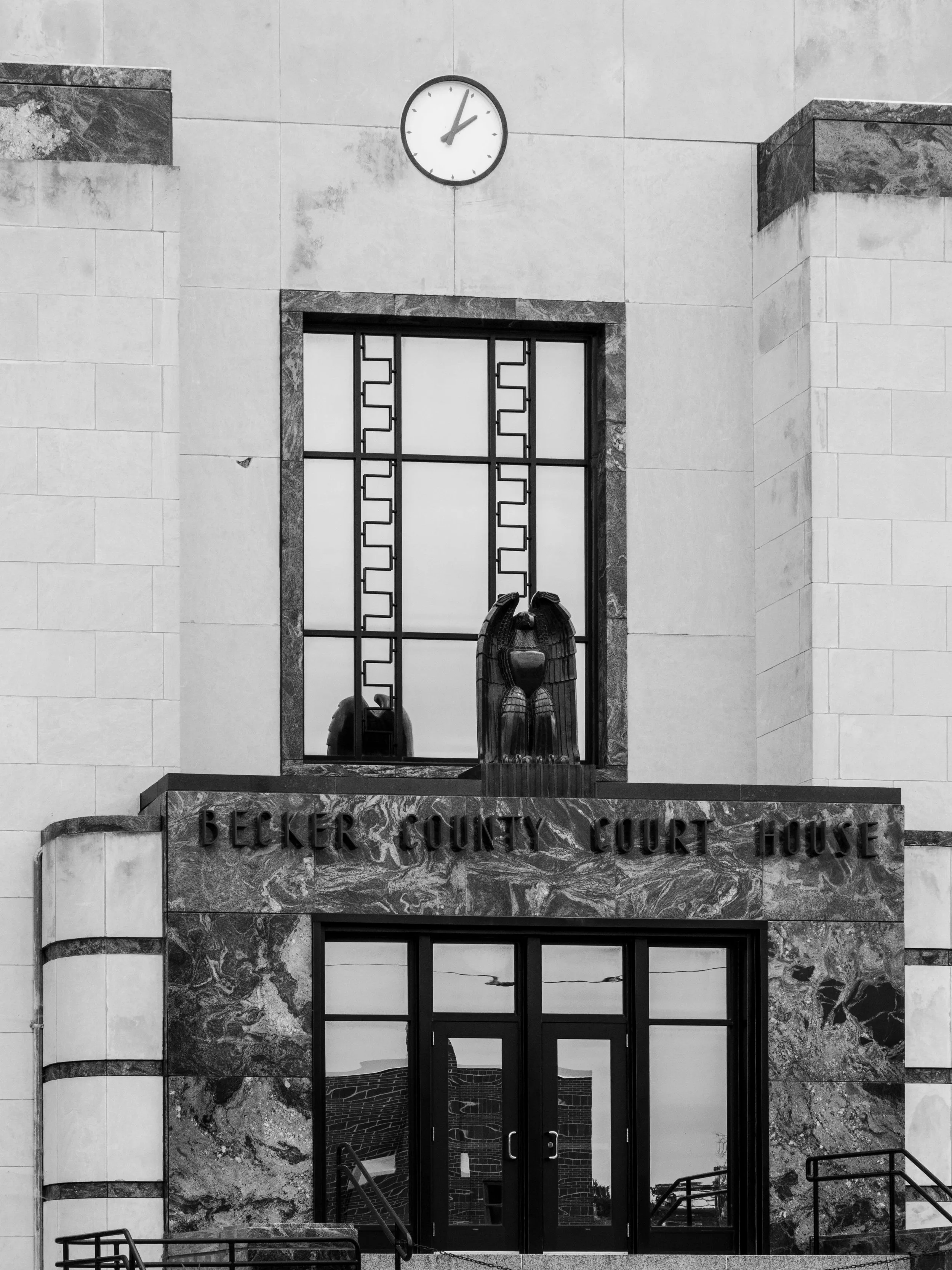
So laments a district court judge familiar with courtroom behavior in Detroit Lakes, Becker County, in northwestern Minnesota. As plans for a new courthouse were being prepared in early 1941, this judge offered his advice on seating arrangements that would allow the jurors to hear “all the evidence” especially when the lawyers and the witnesses “carry on a little conversation back and forth which is scarcely audible to the judge and wholly inaudible to the jurors who should hear it all.” He included a little pencil drawing of the courtroom to show how he thought the parties should all be seated.
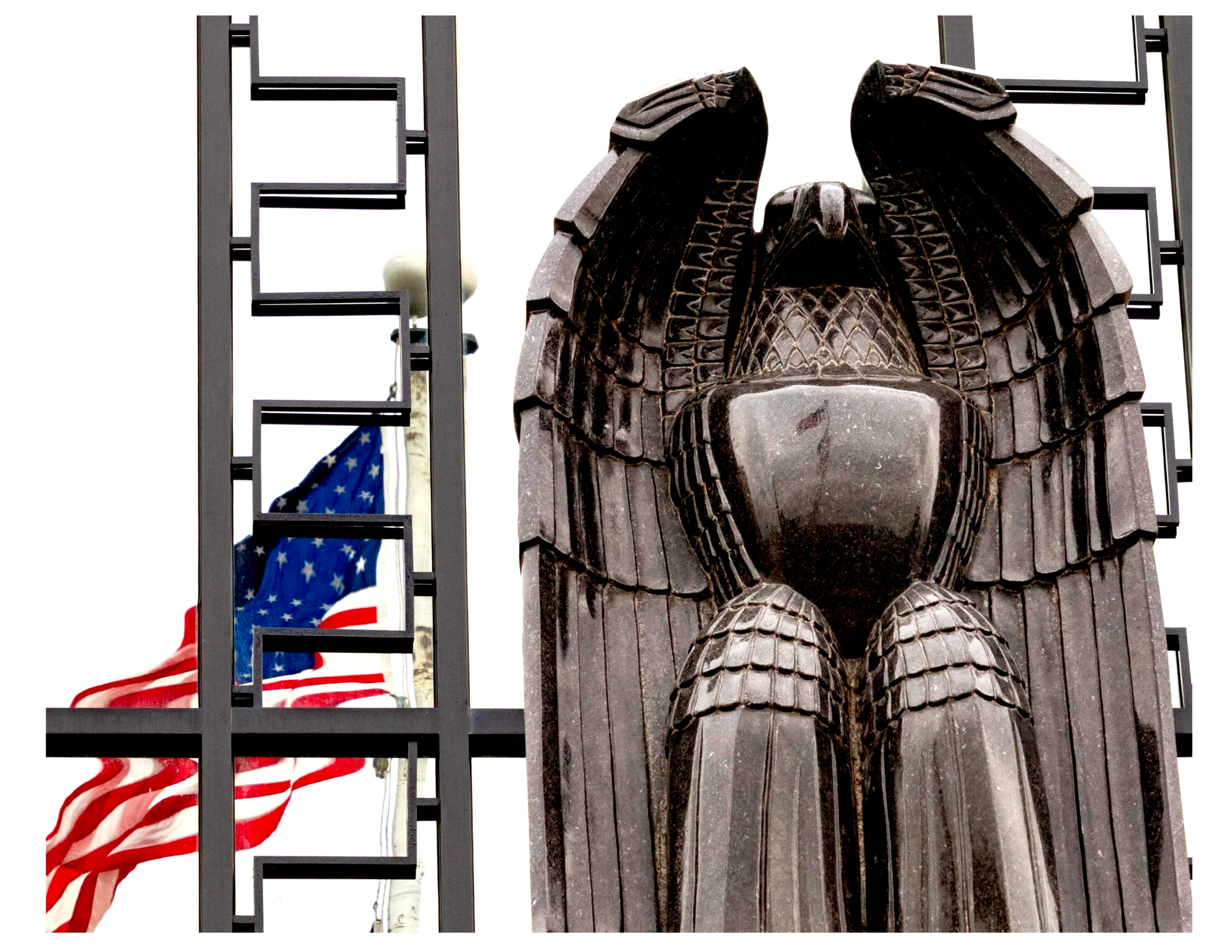
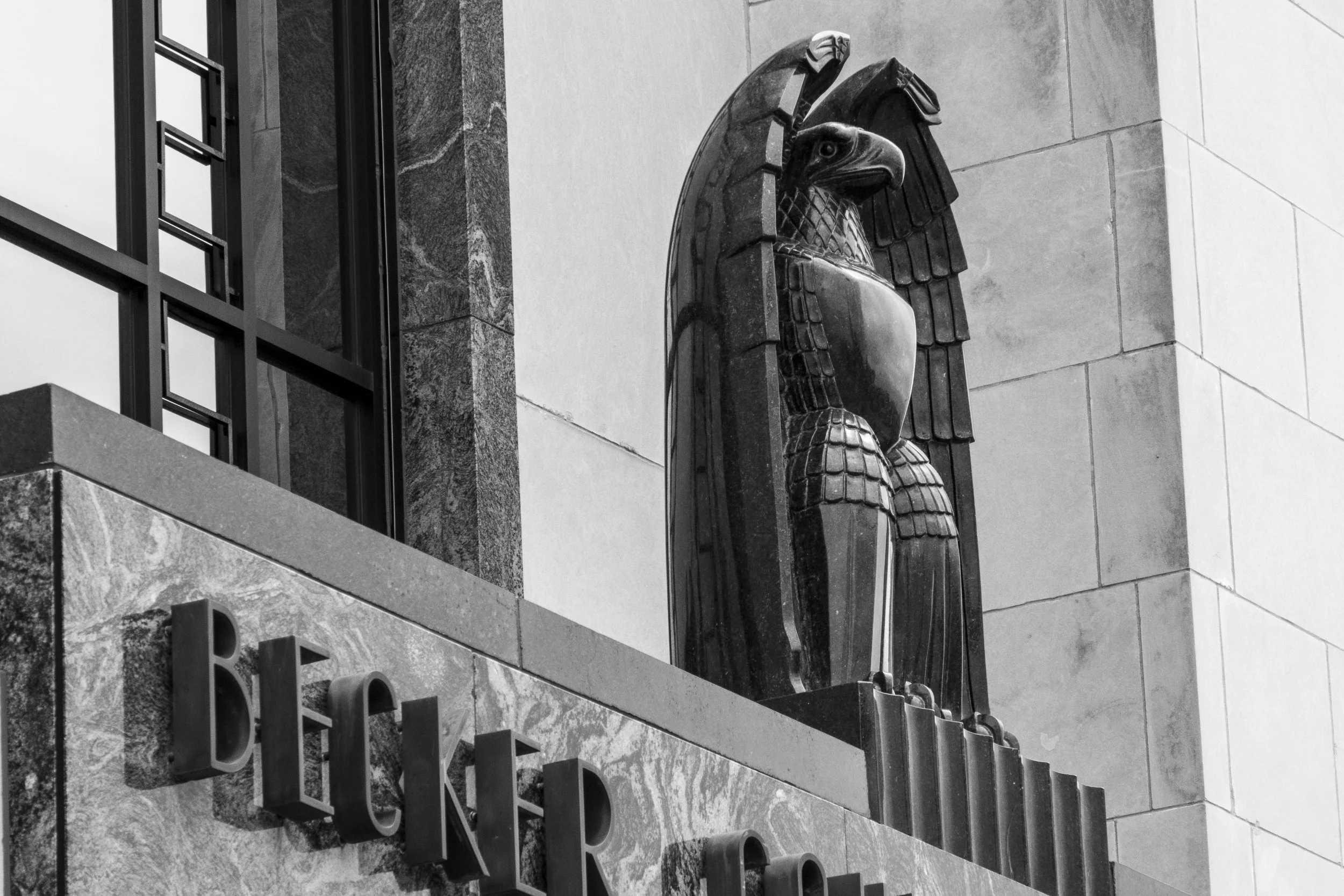
Aside from this entertaining story of a judge’s attempt to shape the courtroom design (surely an acceptable form of influence), what I really love about this 1942 building is the massive black granite eagle guarding the front entrance to the building. Designed in the stylized (and, in this case, quite militaristic) vernacular of the Art Deco era, the figure displays an impressive strength but “whether as a reminder of the federal presence or as a symbol of authority is speculation,” according to documents from the Becker County Museum.
Foss & Co., a design and architecture firm that had won the contract to build the courthouse, has a rendering of the eagle but no information about its sculptor. The 2.5-ton life-size figure may have been designed by the lead architect at the time, Magnus O. Foss, Sr. although, intriguingly, a nearly exact model carved from a block of light-colored Vermont marble, had been created a decade earlier and installed on a courthouse in Albany, NY. Could the same artist have designed and carved both eagles? Had Mr. Foss seen the building in Albany? Even more curiously, the sculptor of the New York eagle, Albert T. Stewart, had worked with Minnesota native Paul Manship who is famously known as the sculptor of the Prometheus statue that overlooks skaters at Rockefeller Center. And there’s more, Mr Stewart created the reliefs on the bronze elevator doors that adorn the 1932 Ramsey County Courthouse in St. Paul. What kind of a rabbit hole have I fallen into?
At any rate, without FDR’s Works Progress Administration funds, to the tune of a $100,000 grant, the county may not have been able to afford the new courthouse. Luckily, a local election to approve an additional $150,000 that was needed to complete the project was approved in 1941.
Many thanks to Adam Peterson, a principal at Foss Architecture and Interiors who generously sent me what his firm has in their archives and my friend, Kate Nearpass Ogden who, as an art historian, has a network of art and architecture geeks who indulged my amateur detective work on this small town (read: flyover) civic gem.
Building in wartime
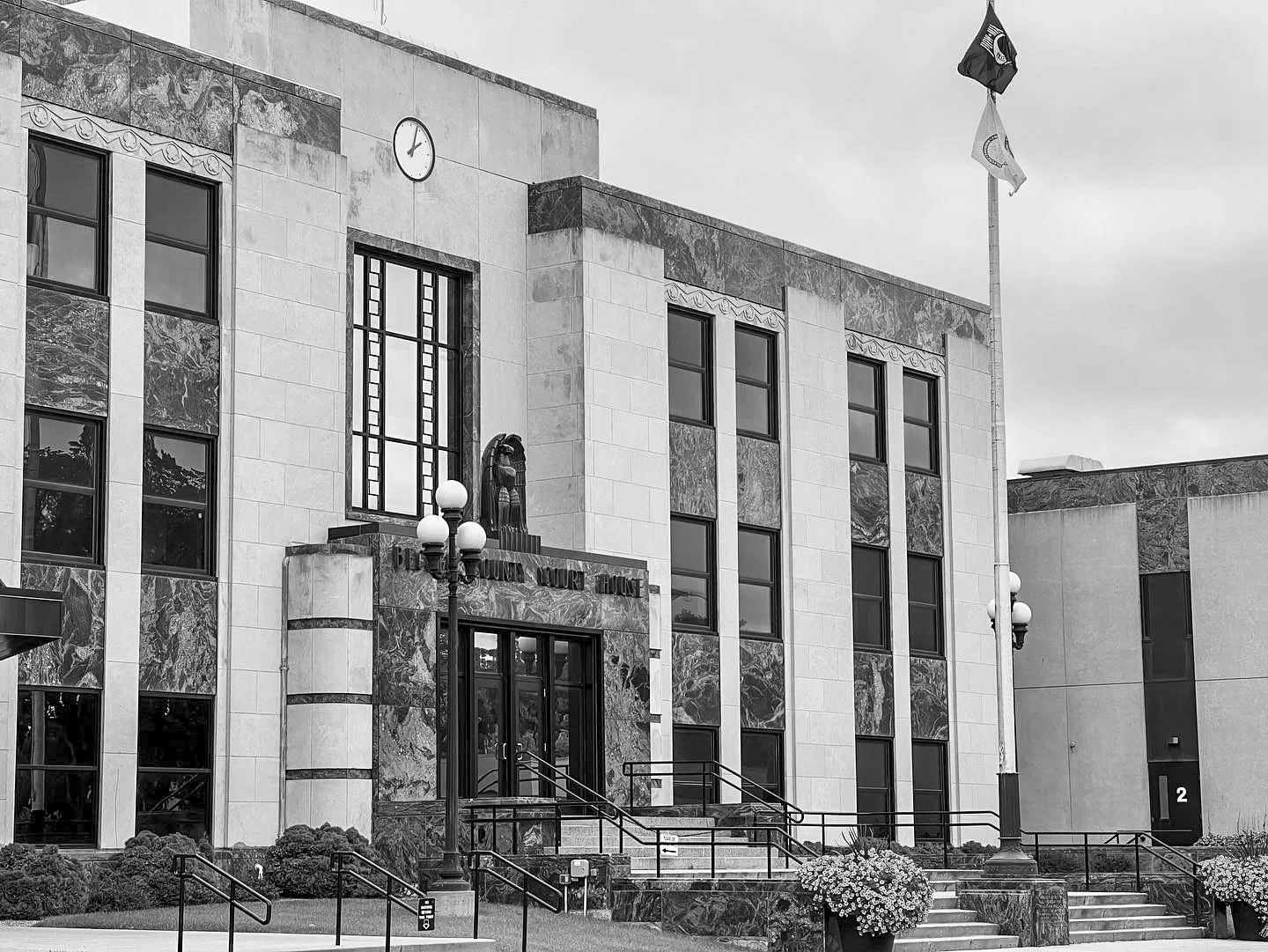
The 1942 Becker County Courthouse replaced a 1884 building that sagged, bulged, leaked, and was dangerously unstable.
More photographs of the Becker County Courthouse
![Drawing for eagle statue [Credit: Foss Architecture]](https://images.squarespace-cdn.com/content/v1/522fca54e4b003b483a557d7/1773599844760-JGWABB7MLUPVJBW6EGPW/Becker%2BCounty%2BCourthouse%2BDrawings%2B-%2BFoss%2BArchitecture.jpg)