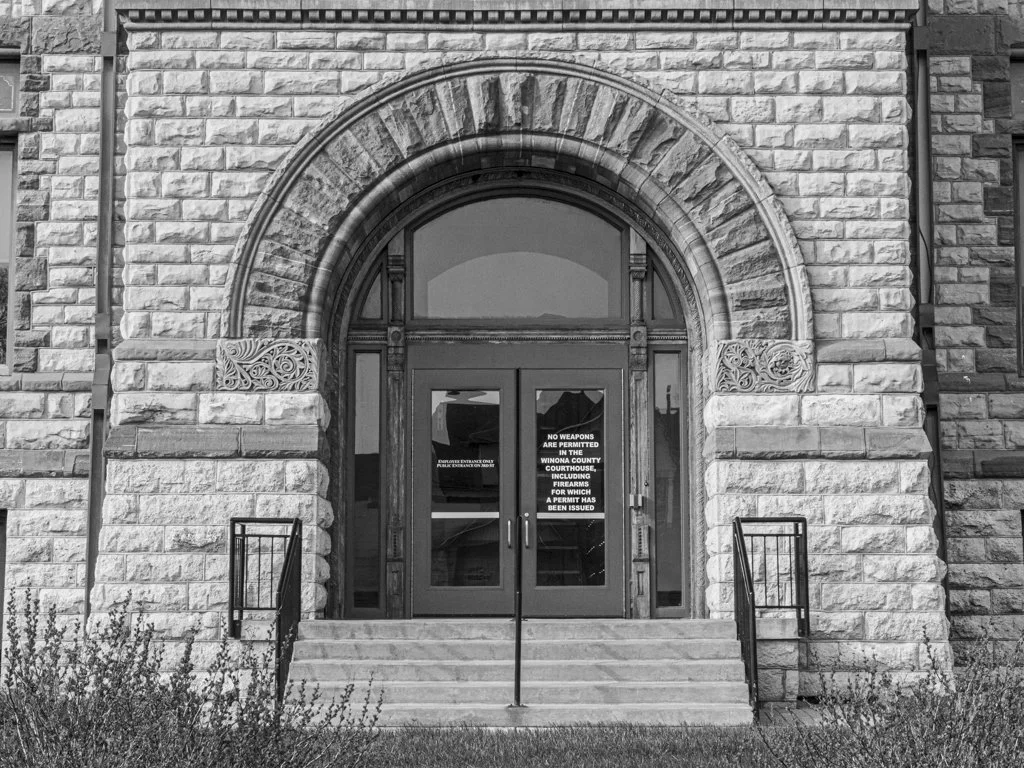
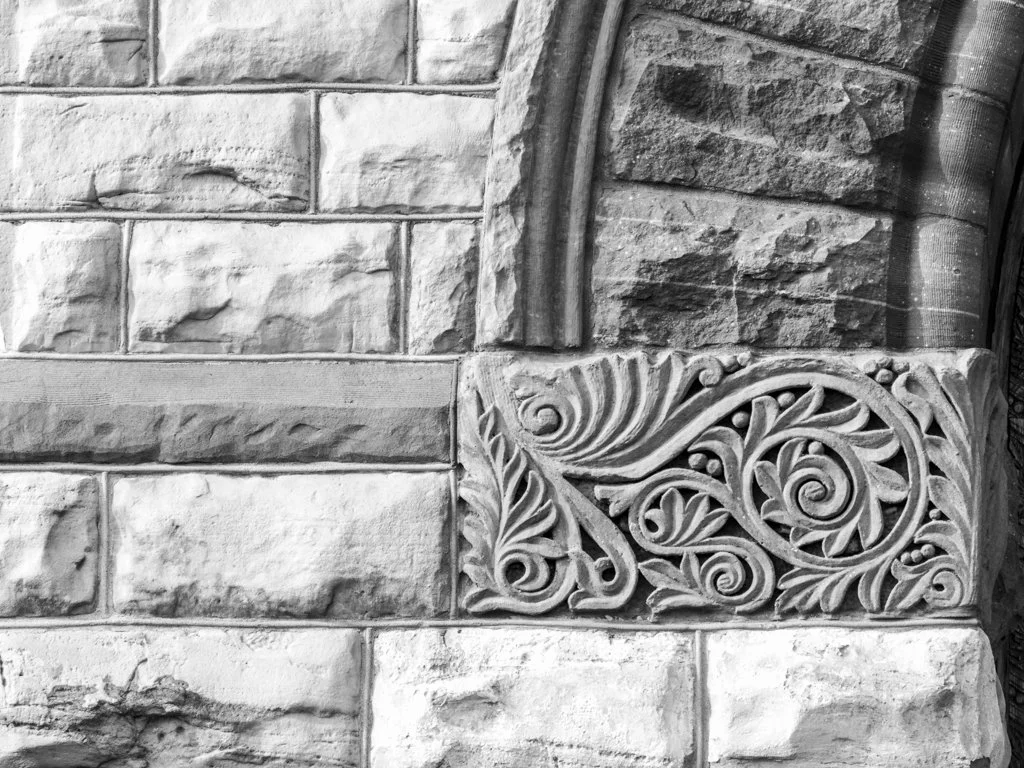
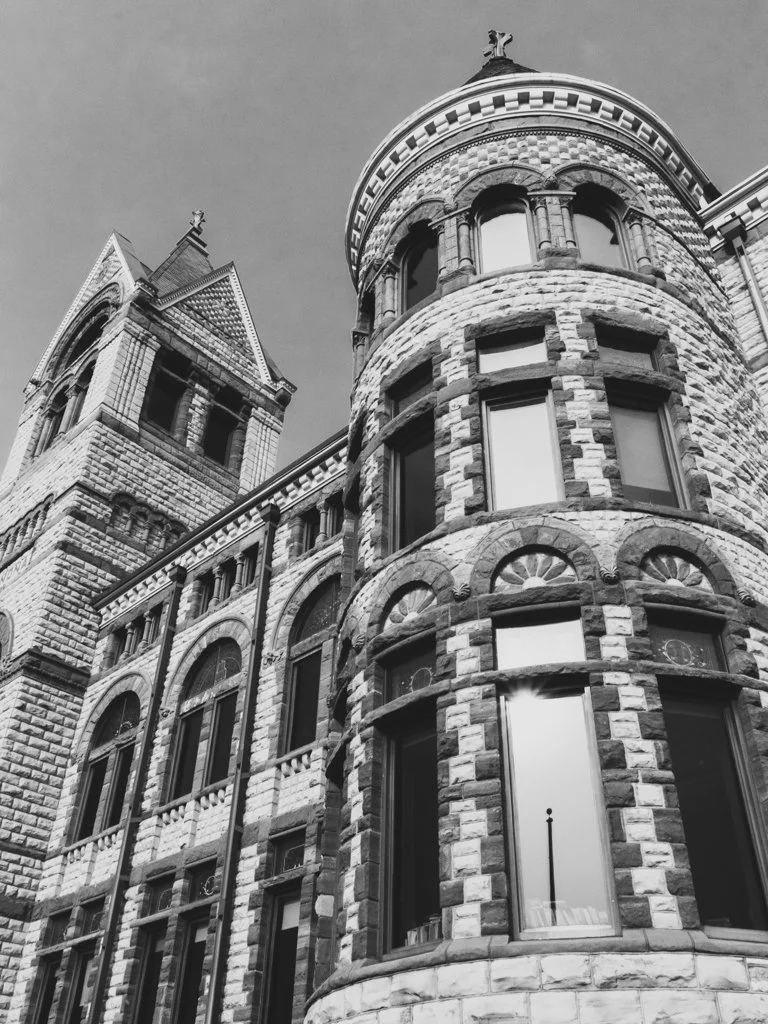
The Winona Daily News editorial from 1964 did not mince words. And yet, the imposing 1888 Richardsonian Romanesque courthouse remains standing to this day, a prime example of a style of architecture that rapidly growing Midwestern towns clearly felt represented their grand and promising futures. When I visited a few years ago it still looked like the “the Lady,” a moniker coined during the preservation efforts of the 1960s and 70s. The building’s turrets and wide arches and carved stone decorations give it the feel of a Victorian-era castle. And, its location dominates the downtown Winona landscape as travelers into the city from Wisconsin cross the bridge spanning the Mississippi River.
The newspaper’s editorial board, not to mention staff writers and the courthouse reporter, spent many years promoting the demolition of the courthouse (and a nearby post office from the same era) and advocating for the construction of a modern building worthy of Winona’s “present day growth and progress,” as a president of the Winona National Bank had argued in 1957. It was a project favored by city government and business leaders but three times rebuffed by the voters of Winona County (most resoundingly by rural voters). Ignoring the wishes of the majority of voters, the county board decided to proceed without a bonding referendum: they would build the new courthouse in multiple stages using existing funds. Gradually the old building would be demolished as the new one arose on an adjacent site.
But the board now had to contend with new, younger voices - college and high school students led the charge - for whom the protests and community organizing of the late 1960s and early 1970s provided a blueprint for their historic preservation activism. A newly formed coalition drew media attention by arranging for picket lines at the courthouse, holding fundraisers with folk, rock, and jazz music and even recording a protest song entitled Save the Lady which was sung at a board meeting. Eventually, the paper acknowledged that popular opinion had swung towards restoration and preservation of the 19th century building and urged city leaders to back such efforts. The restored building, missing some of the interior woodworking details but preserving stained glass windows and original tiled fireplaces, was rededicated in 1974. The 1890 post office had been demolished many years before.
As you cruise down the river this summer, whether on a boat or a scenic highway, make a stop in Winona to see the proud Lady.
To read more about the efforts to “Save the Lady” see this issue of Minnesota History.
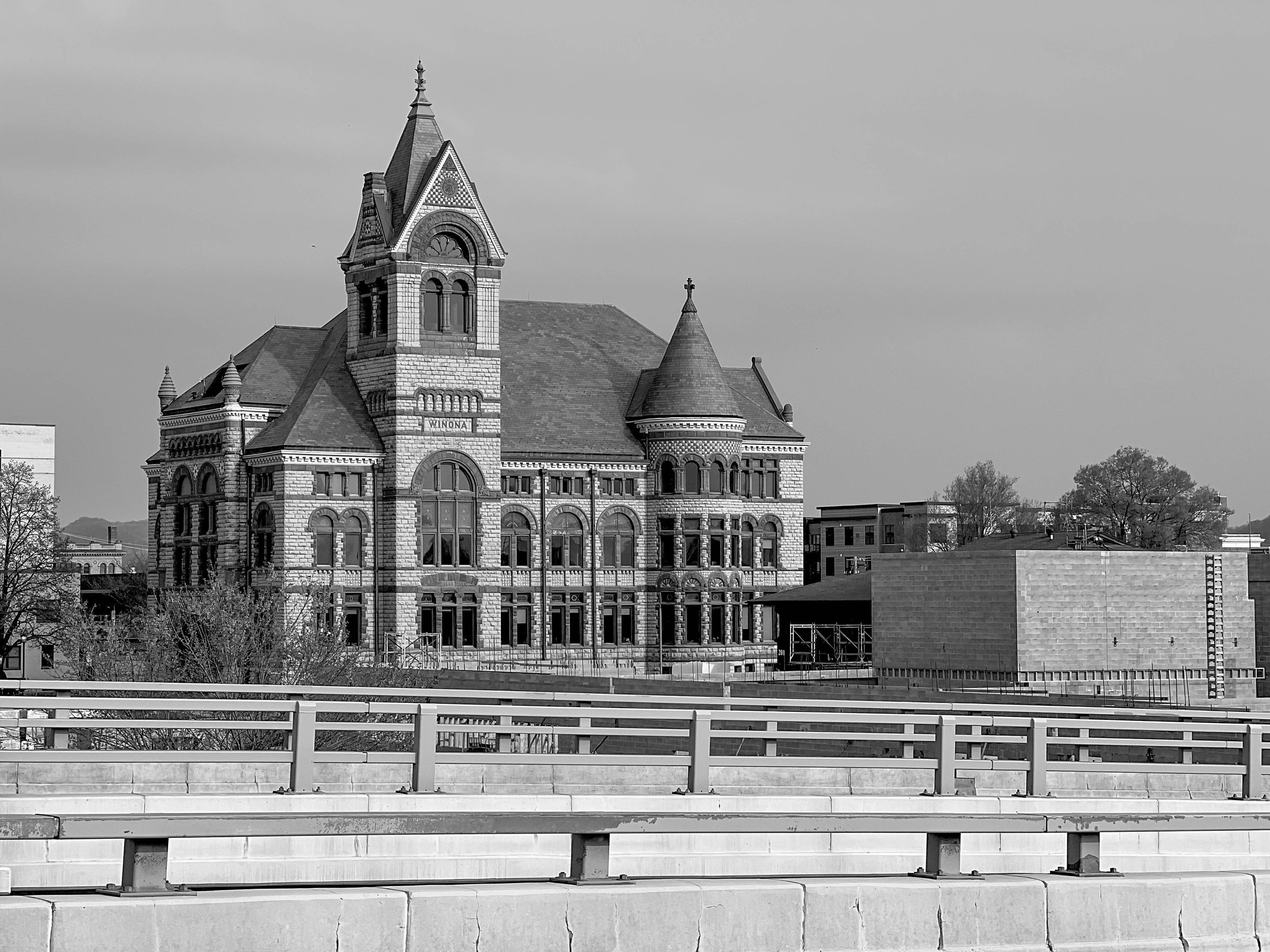
The Lady
The Winona County Courthouse stands today as a testament to one of the earliest and longest disputes over historic preservation in the state of Minnesota.
More images from the courthouse in Winona County